ttps://www.youtube.com/watch?v=N-cmd2hIgUE SEC. BESSENT’S BOMBSHELL: $600B Fraud & Your 2026 Tax Windfall!
Share
Trumps Treasury Secretary Scott Bessent joins Scott Hennen in Minneapolis, MN, to expose a massive $600 billion fraud scheme and announce an early January 26th tax season with record refunds.
He details the new $1,000 “Trump Accounts” for newborns and the “no tax on overtime” policy designed to crush the affordability crisis.
Bessent also outlines a plan to fund a $500 billion defense boost by clawing back stolen taxpayer money.
President Donald Trump’s unprecedented use of tariffs has injected enormous uncertainty into the global economy, depressing US job growth and raising prices along the way.
The Supreme Court on Friday gave Trump an off ramp from his tariff adventure. But Trump almost immediately made clear he’s not taking it.
The justices ruled in a 6-3 decision that many (though not all) of Trump’s tariffs are illegal, giving the White House a way to exit the most aggressive of his import levies and potentially lower the cost of living.
Trump, however, is not backing down from his favorite economic weapon.
Trump suggested the Supreme Court gave him permission to escalate his global trade war by using different tariff authorities to potentially boost tariffs even higher than they were before the historic ruling.
“While I am sure that they did not mean to do so, the Supreme Court’s decision today made a president’s ability to both regulate trade and impose tariffs more powerful and more crystal clear rather than less,” Trump said in a press briefing at the White House Friday.
All of this suggests the cloud of uncertainty over tariffs is not going away – and could get even thicker.
“Unfortunately, we’re going to have another year of uncertainty and chaos. Trump loves tariffs and he will use whatever laws are available to keep them,” Scott Lincicome, vice president of general economics and trade at the Cato Institute, told CNN in a phone interview.
New tariffs
Hours after the Supreme Court handed down its tariff ruling, Trump announced that he will slap a 10% global tariff on imports under Section 122 of the 1974 Trade Act, a different authority that was not struck down by the high court. Trump over the weekend raised that tariff to 15% – the maximum level allowed for Section 122 tariffs, which also require Congressional approval beyond 150 days, although Trump seemed to brush off that limitation.
Trump added that his administration is already exploring using other laws that can be used to impose tariffs.
One option Trump mentioned is Section 301 of the 1974 Trade Act, which requires investigations to be conducted by the US Trade Representative into burdensome trade actions by foreign countries – but contains no limit to the level or duration of tariffs imposed as a result of those investigations.
Another option Trump discussed Friday was Section 338 of the Tariff Act of 1930, which could allow the president to impose tariffs of up to 50% on countries’ imports if he believes they’re engaging in discriminatory trade practices. Section 338 stems from the infamous Smoot-Hawley act that is widely attributed for exacerbating the effects of the Great Depression.
Chief Justice John Roberts. – Tom Williams/CQ-Roll Call, Inc./Getty Images
Trump also claimed the Supreme Court decision permitted him to levy a total embargo on foreign countries’ goods. Treasury Secretary Scott Bessent on Fox News Friday reiterated that claim and called on countries to honor prior trade agreements struck with the administration.
Asked if at the end of implementing new levies the tariff rate will ultimately be higher than currently, Trump said: “Potentially higher. It depends. Whatever we want them to be. But we want them to be fair for other countries.”
The effective tariff rate was roughly 10% before the Supreme Court’s ruling and currently sits at around 4.5%, said Erica York, vice president of federal tax policy at the conservative-leaning Tax Foundation. That could rise back above 10% if Trump applies Section 122 tariffs at 15% globally without exemptions for the 150-day limit.
Michael Feroli, chief economist at JPMorgan Chase, told clients Friday that a “reasonable” scenario is that the administration uses various legal authorities to keep the average effective tariff rate unchanged.
“Even this outcome would entail a significant realignment of tariffs placed on different products from different countries, thereby creating winners and losers,” Feroli wrote in a report. “This would also mean a material increase in trade policy uncertainty, creating a new wind to” capital spending.
He also noted that outside of technology, business investment last year contracted, “a very rare occurrence outside of a recession.”
Last year was the worst year for job growth, outside of a recession, since 2003. Many economists suspect that the chaos and uncertainty caused by tariffs paralyzed some businesses, causing them to hold off on hiring. Employment in manufacturing – the sector that Trump’s tariffs are designed to boost – was particularly weak, losing more than 80,000 jobs last year.
However, Trump officials have largely dismissed these concerns, focusing instead on the vast amounts of revenue the tariffs have generated and promises of a manufacturing boom on the horizon.
“They don’t believe the economic data. They think these tariffs are amazing,” Cato’s Lincicome said.
What this means for prices
Economists don’t expect the Supreme Court decision will be a gamechanger for consumer prices – especially because Trump made clear he’s not retreating.
“Companies are always reluctant to lower prices. Now Trump has given them a perfect excuse not to,” Lincicome said.
Stephanie Roth, chief economist at Wolfe Research, was blunt when asked what the Supreme Court ruling would mean for consumer prices.
“Nothing,” she said.
The Supreme Court didn’t weigh in on whether the administration will be required to refund companies the $134 billion they were charged in tariffs that were overturned. A lower court will take that up. But even if those refunds start coming in, that doesn’t mean consumers will get any relief in the form of discounts or lower prices.
“Companies are highly unlikely to start trimming their prices as a result,” Roth said. “Walmart is not going to give you a check for the 15% tariff on sneakers you bought from them four months ago.”
Trump’s tariffs added $1,000 in tax expenses for the average US household in 2025, according to the Tax Foundation. That number was expected to rise to $1,300 this year before the Supreme Court ruling.
But the future remains unclear. Trump officials haven’t decided yet how they plan to rebuild his tariff agenda. They could implement other tariffs under different authorities, and, in theory, the administration could extend the Section 122 tariffs beyond the 150-day limit by restarting the clock.
The irony is that voters have made clear they don’t like tariffs, which have gotten less popular the more Americans are exposed to them.
Voters are also deeply frustrated by the level of prices, which in some cases have been raised by Trump’s tariffs.
Although the Supreme Court delivered a blow to the president’s tariff agenda, this historic decision is unlikely to be the gamechanger many voters are hoping for.
NATIONAL Kavanaugh Warns of Fallout From Supreme Court Tariff Ruling By Jesus Mesa Newsweek Updated February 20, 2026 11:09 AM Gift Article
Justice Brett Kavanaugh dissented Thursday after the Supreme Court struck down President Donald Trump’s sweeping tariffs and warned the majority’s ruling could unleash an economic mess the Court did nothing to prepare for.
In a 6-3 decision, the Court held that the International Emergency Economic Powers Act (IEEPA) does not authorize the President to impose tariffs, gutting a cornerstone of Trump’s economic agenda. Chief Justice John Roberts wrote for the majority, joined by Justices Sotomayor, Kagan, Gorsuch, Barrett, and Jackson. Kavanaugh, joined by Justices Clarence Thomas and Samuel Alito, pushed back sharply, arguing the Court wasn’t just wrong on the law, but had opened the door to immediate disruption.
He contended that tariffs are a traditional tool presidents have long used to “regulate…importation,” and that the majority’s approach contravenes “text, history, and precedent.”
Reading the following article – no matter how they try to balance the scales of justice – the court can’t seem to open their minds and leave the liberal/conservative hardware at the door. The stark realization is our country has been dismantled by the left with DOGE proof. The tariffs were put in play to put our country on sound footing and should have been part of reasoning when making the decision. The country was abused by the left, plain ad simple and did not follow the Constitution.
Why isn’t this court ever rattling the chains of the Constitution and the fact Obama/Biden never used it during their time (12 years) in office which caused the over-spending and the tariffs were the result to try to drag our country back on track. They called out the Constitution when they said it did not give President Trump the power and the power belonged to Congress. Yet, Biden used the auto pen and no one opened their mouths. And, the process takes months for the wheels in Congress/the Supreme Court to work a problem.
In my opinion, before the Supreme Court start their deliberations, they need to start with a clean plate by discussing how their individual conservative/liberal thought process comes into play with the final decision so the whole court knows from the beginning what is engrained in each mind. After that happens, a fresh start can come into play. In other words, the base would be the lawsuit is tied to the Constitution and the fact tariffs were used to generate more money for the country. We know all countries charge us tariffs.
Very simple – the court could have responded to help the country in its need which was to state: Yes, you can have the tariffs if you remedy the situation by sending the lawsuit back to the President and have Congress in the form of a bill with emergency orders to save our country. Our dollar is evaporating – isn’t that an emergency?
Does the court ever make a decision with an adjustment – rather than make a cold-turkey decisions because they just drop the hammer and make an end-all decision. This doesn’t solve the country’s problem that was brought before them. The court always throws the baby out with the bath water.
ShareShare Article via FacebookShare Article via TwitterShare Article via LinkedInShare Article via Email
Key Points
Tariff collections surged in January, with the U.S. collecting some $30 billion in customs duties. This put the year-to-date tally at $124 billion, up 304% from the same period in 2025.
The tariffs have helped put a dent in the pace of the budget deficit. The shortfall in January totaled roughly $95 billion, down about 26% from the year-ago period.
A cargo ship is loading and unloading foreign trade containers at Qingdao Port in Qingdao, Shandong Province, China, Jan. 13, 2026.
Cfoto | Future Publishing | Getty Images
The U.S. government in January ran up a smaller deficit than a year ago, while tariff collections surged and provided a reminder of how pivotal a long-awaited Supreme Court decision could be to federal fiscal health.
Customs duties collected through tariffs totaled $30 billion for the month, putting the fiscal year-to-date tally at $124 billion, or 304% more than the same period in 2025.
President Donald Trump first levied the duties in April 2025 with an across-the-board rate on all goods and services entering the U.S. along with a menu of so-called reciprocal tariffs on individual countries. Since then, the White House has been negotiating with its trading partners, backing off on some of the more aggressive charges while maintaining tough talk on issues.
Last November, the Supreme Court heard oral arguments challenging the auspices under which Trump justified the tariffs. The decision was expected in January. The high court hasn’t ruled yet, and there’s concern in the White House that a negative ruling could force the U.S. into reimbursing the duties collected so far.
The tariffs helped put a dent in the pace of the budget deficit.
In the fourth month of the fiscal year, the shortfall totaled roughly $95 billion, down about 26% from the same period a year ago, the Treasury Department reported
Year to date, that put federal red ink at $697 billion, or down 17% from the same period of fiscal 2025, according to numbers not adjusted for calendar. Calendar adjustments put the deficit reduction at 21%.
Interest on the $38.6 trillion U.S. debt continues to be a burden on the national finances. Net interest paid totaled $76 billion for the month, more than all other expenditures except Medicare, Social Security and health care. Year to date, gross interest has totaled $426.5 billion, up from $392.2 billion the year before.
by John Carney – Breitbart Economics Editor Alex Marlow – Breitbart Editor-In-Chief
February 20, 2026
The Supreme Court Struck Down Tariffs; Here’s What Comes NextWelcome back to Friday! This is the weekly wrap of economic and financial news from Breitbart Business Digest, where we never overreach with our emergency powers.This week, there were huge fights over who pays for the tariffs, major signals that the U.S. manufacturing sector is strengthening, a trade report showing that the deficit has been almost cut in half since Liberation Day, and a GDP report that was disappointing, thanks in part to the government shutdown. We’re going to put all of that aside for now (but you can read about them in the links above) to focus on tariffmegeddon: the Supreme Court’s decision striking down Trump’s assertion of broad emergency tariff power.Photos of the U.S. Supreme Court justices are displayed on a television screen on the floor of the New York Stock Exchange after the court struck down President Trump’s tariffs on February 20, 2026. (Michael Nagle/Bloomberg via Getty Images)SCOTUS Overturns Trump’s ‘International Economic Emergency’ TariffsThe Supreme Court invalidated President Trump’s sweeping tariff policy on Friday, ruling 6-3 that the International Emergency Economic Powers Act (IEEPA) did not grant the president the authority to impose tariffs. This was not a surprise. Even before the case came before the courts, supporters of the tariffs understood the novel use of IEEPA to impose tariffs left it potentially vulnerable. During oral arguments before the Supreme Court, it was clear many of the justices were uncomfortable with the Trump administration’s tariff authority claim.For non-lawyers, the Trump administration’s attempt to impose emergency tariffs on almost every other country in the world was always a bit questionable for the simple reason that it had never been tried before.At the heart of Chief Justice Roberts’ decision is something known as the major questions doctrine, which roughly says that if Congress wants a law to grant the executive the authority to pass rules or enact policies that create really big changes in our economy or society, it needs to make it super clear that that’s what it is doing. Roberts—joined by Justices Amy Coney Barrett and Neil Gorsuch—said that Congress hadn’t satisfied the major questions burden when it comes to granting tariff authority under IEEPA.Roberts also held that although the law allows the president to require import licenses and even outright ban imports, this does not imply a power to tax imports. “Even though a tariff is, in some sense, ‘less extreme’ than an outright compulsion or prohibition, it does not follow that tariffs lie on the spectrum between those poles. They are instead ‘very clear[ly] . . . a branch of the taxing power,’… and fall outside the spectrum entirely,” Roberts held.The liberal Justices said they did not need the major question doctrine to decide the case. Just a plain reading of the statute makes it clear IEEPA doesn’t allow for presidentially imposed tariffs. That’s hardly surprising. The idea that Trump lacks legal authority to carry out his policies has been a consistent finding of the Supreme Court’s liberal justices and lower court progressives in so many cases that fair-minded court-watchers are forced to wonder if the new legal principle among progressives in the judiciary is simply: Trump always loses. “They’re an automatic no,” President Trump said Friday. “No matter how great a case you have, it’s a no.” It’s Trump Derangement Syndrome in legal form.The dissent by Justice Brett Kavanaugh is pretty clearly the stronger argument. He points out that the major questions doctrine should not even arise because the power to impose tariffs to regulate trade has been a regular feature of our legal infrastructure around trade since the founding. What’s more, in similar circumstances, the courts have upheld tariff authority. Roberts tries to pick apart the precedents, but this is largely unpersuasive. Kavanaugh also points out that it is a bit ridiculous that the majority’s view of the law would allow the president to block all imports but not charge even one dollar of tariffs.Justice Clarence Thomas’s separate dissent argues that the non-delegation doctrine—which limits Congress’s power to delegate certain powers to the executive branch—doesn’t apply here. “The power to impose duties on imports can be delegated,” Thomas writes. “At the founding, that power was regarded as one of many powers over foreign commerce that could be delegated to the President.”Much an Import Duty About Nothing?The Kavanaugh dissent pointed out that “the decision might not substantially constrain a President’s ability to order tariffs going forward.” Sure enough, just hours after the court handed down its decision, President Trump announced a global 10 percent tariff on all imports would be imposed under Section 122 of the Trade Act of 1974.This provision allows the president to address “large and serious” trade imbalances by imposing up to a 15 percent tariff on imports. In addition, it grants him the authority to impose import quotas. The combination of these two powers could restore the president’s leverage in international trade talks, allowing the U.S. to threaten even higher tariffs and quotas for countries that do not agree to abide by trade deals cut under IEEPA.President Donald Trump speaks during a press briefing at the White House on Feb. 20, 2026, in Washington, DC, as Commerce Secretary Howard Lutnik, looks on. (AP Photo/Evan Vucci)The catch? The Section 122 tariffs expire after 150 days unless Congress votes to extend them. This would put the issue of tariffs front and center for lawmakers, who have until now been able to avoid dealing with the tariffs because they were imposed by presidential fiat. Of course, Congress could also simply pass an amendment to IEEPA making it clear that the president does have the power to impose tariffs, essentially overturning the Roberts decision.There’s also Section 338 of the Trade Act of 1930, the provision which enabled the much-maligned Smoot-Hawley tariffs. Yes. It’s still on the books. And it says the president can impose a tariff of up to 50 percent on any country that discriminates against U.S. commerce. This statute is very clear about presidential authority, although it doesn’t define the targeted discrimination and is vague about what procedural steps—if any—might be required. Also, it hasn’t been invoked in many decades, which means it has not been tested by the courts.If Congress doesn’t extend the tariffs—and there are still enough anti-tariff folks in the Republican caucus to make this an open question—the administration could very likely simply re-declare a serious trade imbalance and re-impose the tariffs. That, however, would likely bring about a host of new legal challenges.Perhaps a stronger response would be to adopt the proposal outlined in Breitbart Business Digest earlier this month: a licensing system called I-ACES (Import Authorization Certificate Exchange System). The concept is simple. IEEPA explicitly allows the President to “prohibit” imports and issue “licenses” as exceptions. Under I-ACES, Treasury would sell import authorization certificates directly to foreign governments. A country running a $50 billion trade surplus with the U.S. would pay Treasury $10 billion (at a 20 percent rate) for certificates authorizing imports for one year. The foreign government then decides how to distribute those licenses to its exporters. What makes this harder to challenge is that since the Supreme Court struck down tariffs by insisting licenses and import regulations are fundamentally different from tariffs, they can’t then turn around and claim I-ACES licenses are really tariffs.The political advantage of I-ACES is that it kills the “Americans pay tariffs” talking point. Under this system, the German government literally writes a check to the U.S. Treasury, so there’s zero ambiguity about who pays. Foreign governments face the same choice they do with tariffs: pay for continued access, lose access to U.S. markets, or open their own markets to rebalance trade. And like tariffs, license fees can be negotiated: invest in American manufacturing and get a discount, buy Russian oil and pay more. The Supreme Court just handed Trump the legal argument he needs to implement this system, which may prove more effective than tariffs at bringing surplus countries to the negotiating table.How Will the Rest of the World React?The Trump administration has used the threat of IEEPA tariffs to strike trade deals with nations around the world. In exchange for lowering IEEP tariffs, governments have agreed to open their markets to U.S. products and invest hundreds of billions in U.S. production. Now that those tariffs have been struck down, it will be tempting for at least some of the countries to renege on their promises.Some countries have already said they will not do this. And the threat of Section 122 tariffs and tariffs under other statutes may make many others think twice. But if any do decide to unwind the 2025 trade deals, this will be a major vindication of the Trump policy. It will demonstrate that the tariffs really were an important part of the president’s ability to improve the terms of trade for the U.S. and to conduct foreign policy.
If other countries do decide to close their markets to U.S. products, that may well create the impetus in Congress to grant the president the power that the Supreme Court said it did not grant already.


 The Motley Fool·

 by
by Photos of the U.S. Supreme Court justices are displayed on a television screen on the floor of the New York Stock Exchange after the court struck down President Trump’s tariffs on February 20, 2026. (Michael Nagle/Bloomberg via Getty Images)SCOTUS Overturns Trump’s ‘International Economic Emergency’ TariffsThe Supreme Court invalidated President Trump’s sweeping tariff policy on Friday, ruling 6-3 that the International Emergency Economic Powers Act (IEEPA) did not grant the president the authority to impose tariffs. This was not a surprise. Even before the case came before the courts, supporters of the tariffs understood the novel use of IEEPA to impose tariffs left it potentially vulnerable. During oral arguments before the Supreme Court, it was clear many of the justices were uncomfortable with the Trump administration’s tariff authority claim.For non-lawyers, the Trump administration’s attempt to impose emergency tariffs on almost every other country in the world was always a bit questionable for the simple reason that it had never been tried before.At the heart of Chief Justice Roberts’ decision is something known as the major questions doctrine, which roughly says that if Congress wants a law to grant the executive the authority to pass rules or enact policies that create really big changes in our economy or society, it needs to make it super clear that that’s what it is doing. Roberts—joined by Justices Amy Coney Barrett and Neil Gorsuch—said that Congress hadn’t satisfied the major questions burden when it comes to granting tariff authority under IEEPA.Roberts also held that although the law allows the president to require import licenses and even outright ban imports, this does not imply a power to tax imports. “Even though a tariff is, in some sense, ‘less extreme’ than an outright compulsion or prohibition, it does not follow that tariffs lie on the spectrum between those poles. They are instead ‘very clear[ly] . . . a branch of the taxing power,’… and fall outside the spectrum entirely,” Roberts held.The liberal Justices said they did not need the major question doctrine to decide the case. Just a plain reading of the statute makes it clear IEEPA doesn’t allow for presidentially imposed tariffs. That’s hardly surprising. The idea that Trump lacks legal authority to carry out his policies has been a consistent finding of the Supreme Court’s liberal justices and lower court progressives in so many cases that fair-minded court-watchers are forced to wonder if the new legal principle among progressives in the judiciary is simply: Trump always loses. “They’re an automatic no,” President Trump said Friday. “No matter how great a case you have, it’s a no.” It’s Trump Derangement Syndrome in legal form.The dissent by Justice Brett Kavanaugh is pretty clearly the stronger argument. He points out that the major questions doctrine should not even arise because the power to impose tariffs to regulate trade has been a regular feature of our legal infrastructure around trade since the founding. What’s more, in similar circumstances, the courts have upheld tariff authority. Roberts tries to pick apart the precedents, but this is largely unpersuasive. Kavanaugh also points out that it is a bit ridiculous that the majority’s view of the law would allow the president to block all imports but not charge even one dollar of tariffs.Justice Clarence Thomas’s separate dissent argues that the non-delegation doctrine—which limits Congress’s power to delegate certain powers to the executive branch—doesn’t apply here. “The power to impose duties on imports can be delegated,” Thomas writes. “At the founding, that power was regarded as one of many powers over foreign commerce that could be delegated to the President.”Much an Import Duty About Nothing?The Kavanaugh dissent pointed out that “the decision might not substantially constrain a President’s ability to order tariffs going forward.” Sure enough, just hours after the court handed down its decision, President Trump announced a global 10 percent tariff on all imports would be imposed under Section 122 of the Trade Act of 1974.This provision allows the president to address “large and serious” trade imbalances by imposing up to a 15 percent tariff on imports. In addition, it grants him the authority to impose import quotas. The combination of these two powers could restore the president’s leverage in international trade talks, allowing the U.S. to threaten even higher tariffs and quotas for countries that do not agree to abide by trade deals cut under IEEPA.
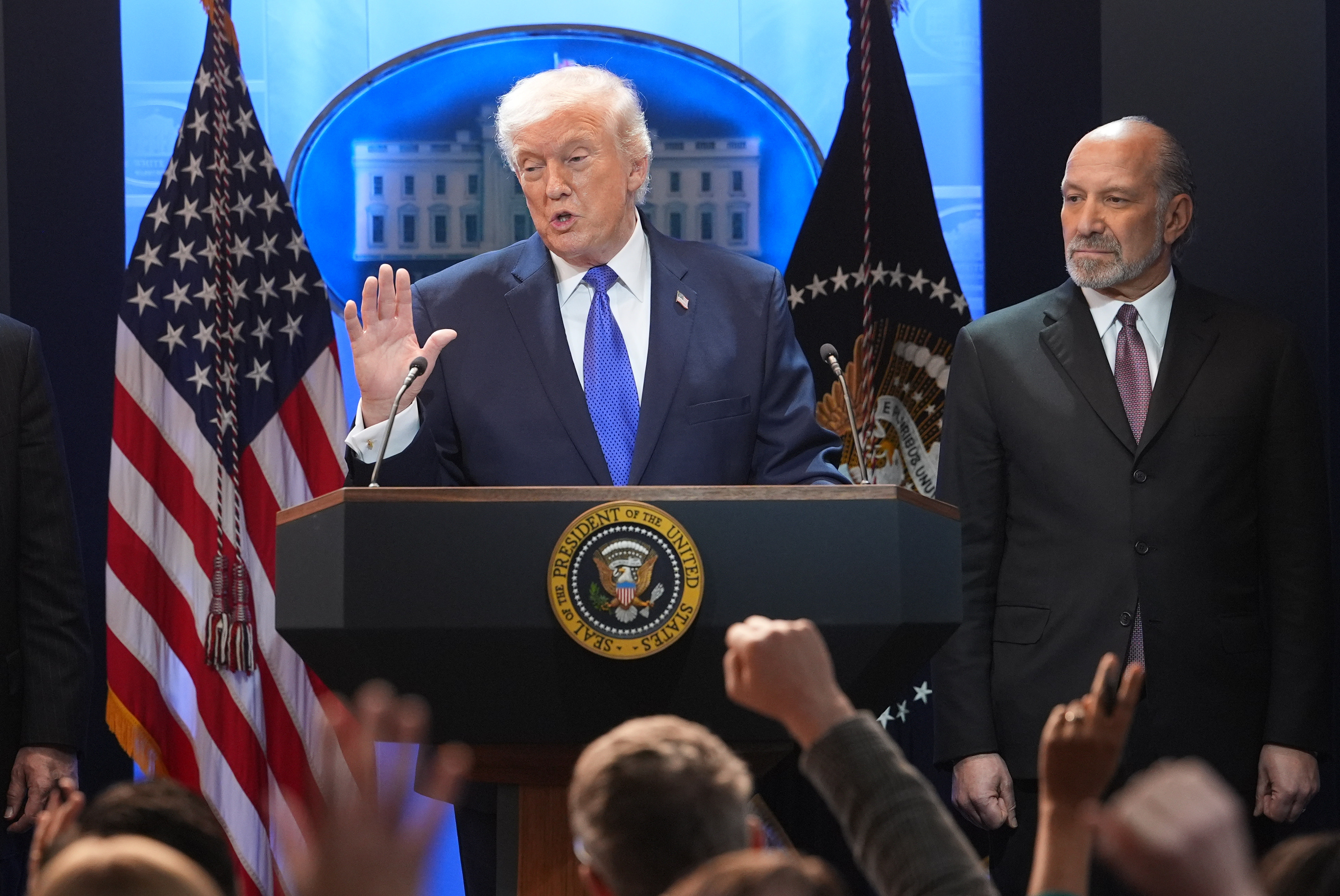 President Donald Trump speaks during a press briefing at the White House on Feb. 20, 2026, in Washington, DC, as Commerce Secretary Howard Lutnik, looks on. (AP Photo/Evan Vucci)The catch? The Section 122 tariffs expire after 150 days unless Congress votes to extend them. This would put the issue of tariffs front and center for lawmakers, who have until now been able to avoid dealing with the tariffs because they were imposed by presidential fiat. Of course, Congress could also simply pass an amendment to IEEPA making it clear that the president does have the power to impose tariffs, essentially overturning the Roberts decision.There’s also Section 338 of the Trade Act of 1930, the provision which enabled the much-maligned Smoot-Hawley tariffs. Yes. It’s still on the books. And it says the president can impose a tariff of up to 50 percent on any country that discriminates against U.S. commerce. This statute is very clear about presidential authority, although it doesn’t define the targeted discrimination and is vague about what procedural steps—if any—might be required. Also, it hasn’t been invoked in many decades, which means it has not been tested by the courts.If Congress doesn’t extend the tariffs—and there are still enough anti-tariff folks in the Republican caucus to make this an open question—the administration could very likely simply re-declare a serious trade imbalance and re-impose the tariffs. That, however, would likely bring about a host of new legal challenges.Perhaps a stronger response would be to adopt the proposal
  kommonsentsjane