KOMMONSENTSJANE – Biden Renews Iran Sanctions Waiver Unlocking $10 Billion.

12/13/2024

More information needed as to what is the money going to be used for?

HUMOR!

Due to Biden’s mental status – he is incapable of making decisions at this moment; therefore, the above transaction is cancelled until further notice due to lack of use information needed.

“No Funds for Iranian Terrorism Act,” due to lack of use information.

*****

Posted on  by Karen Givens

The Biden administration has once again reauthorized a contentious sanctions waiver that unlocks upwards of $10 billion in frozen funds for Iran. This decision, revealed in a notice submitted to Congress late Wednesday, has sparked intense debate on Capitol Hill, especially among Republican lawmakers.

The waiver permits Iraq to transfer electricity payments to Iran via third-party countries, a practice the Biden administration initially approved in November. With the previous waiver set to expire, the renewal ensures continued financial transactions between Iraq and Iran. The funds, denominated in dinars, can now be converted into euros and deposited into Iranian bank accounts in Oman. The State Department argues this measure is essential for Iraq to maintain its energy supply while transitioning to energy self-sufficiency. Critics, however, contend that the waiver indirectly supports Iran’s controversial activities, including its sponsorship of terrorism.

GOP leaders in Congress have been vocal in their disapproval. Republican lawmakers and foreign policy experts argue that the Biden administration’s actions contradict broader U.S. foreign policy objectives. They emphasize Iran’s ongoing support for Hamas, other proxy groups, and attacks on American outposts in the Middle East.

Representative Bill Huizenga (R-Mich.) and three other Republican colleagues wrote to the Biden administration earlier this week, warning about the potential misuse of the funds. “By waiving the application of sanctions, the Administration is maintaining a financial lifeline for the Iranian regime, even as it continues to support terrorist organizations around the world,” their letter stated.

The lawmakers also highlighted Iran’s history of bypassing humanitarian restrictions, suggesting that these funds could inadvertently support nuclear activities, terrorist proxies, and military operations.

Richard Goldberg, a former White House National Security Council member, called the latest waiver significantly different from those issued under the Trump administration. According to Goldberg, the updated waiver provides Iran with more flexibility in using the funds. “This is not the same waiver for Iraqi electricity imports that has been issued since 2018,” he explained. “The Biden version gives Tehran access to money for budget support, debt payments, and import subsidies.”

Goldberg further alleged that the administration’s lack of transparency regarding how much money Iran has accessed in recent months raises questions about U.S. oversight. He linked the funds to recent incidents, including attacks on American soldiers and naval forces, and urged Congress to pass the “No Funds for Iranian Terrorism Act,” legislation aimed at cutting off Iran’s access to these funds.

The State Department, however, stands by the waiver, emphasizing its importance for Iraq’s stability and energy security. A spokesperson stated, “Since 2018, the waiver has remained necessary as Iraq weans itself off Iranian energy imports, which cannot happen overnight.” According to the department, Iraq has made significant progress by developing regional electricity interconnections, capturing natural gas, and exploring domestic energy resources.

Regarding concerns about fund misuse, the State Department insists that the money remains restricted to humanitarian purposes. “These funds can only be used for transactions involving food, agricultural commodities, medicine, medical devices, and other non-sanctionable items,” the spokesperson said. “The money goes straight to trusted vendors or financial institutions in other countries and never directly enters Iran.”

Despite these assurances, skeptics argue that money is inherently fungible. By freeing up $10 billion for limited uses, Iran’s government may redirect other financial resources toward its military and geopolitical ambitions.

The renewed waiver reflects the Biden administration’s balancing act between maintaining Iraq’s energy needs and countering Iran’s destabilizing activities. Iraq’s dependence on Iranian energy imports remains a pressing issue, but critics contend that the waiver indirectly funds activities harmful to U.S. interests and allies.

Republican opposition to the waiver is likely to grow as Iran’s regional influence expands. With GOP lawmakers citing Iran’s history of deception and its alleged links to recent attacks on American forces, the administration faces increasing pressure to reconsider its stance. Calls for legislative action, such as the proposed “No Funds for Iranian Terrorism Act,” signal a potential showdown in Congress over future sanctions policy.

As the debate unfolds, questions about U.S. oversight, Iran’s compliance with restrictions, and the waiver’s impact on regional stability will remain central to the discourse. Whether the Biden administration’s approach ultimately achieves its intended balance or exacerbates existing tensions is yet to be seen.

Posted on  by Karen Givens
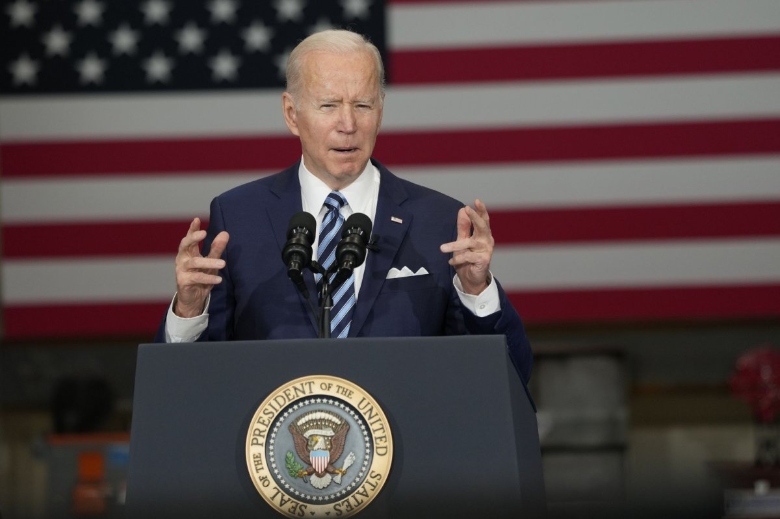
The Biden administration has once again reauthorized a contentious sanctions waiver that unlocks upwards of $10 billion in frozen funds for Iran. This decision, revealed in a notice submitted to Congress late Wednesday, has sparked intense debate on Capitol Hill, especially among Republican lawmakers.

The waiver permits Iraq to transfer electricity payments to Iran via third-party countries, a practice the Biden administration initially approved in November. With the previous waiver set to expire, the renewal ensures continued financial transactions between Iraq and Iran. The funds, denominated in dinars, can now be converted into euros and deposited into Iranian bank accounts in Oman. The State Department argues this measure is essential for Iraq to maintain its energy supply while transitioning to energy self-sufficiency. Critics, however, contend that the waiver indirectly supports Iran’s controversial activities, including its sponsorship of terrorism.

GOP leaders in Congress have been vocal in their disapproval. Republican lawmakers and foreign policy experts argue that the Biden administration’s actions contradict broader U.S. foreign policy objectives. They emphasize Iran’s ongoing support for Hamas, other proxy groups, and attacks on American outposts in the Middle East.

Representative Bill Huizenga (R-Mich.) and three other Republican colleagues wrote to the Biden administration earlier this week, warning about the potential misuse of the funds. “By waiving the application of sanctions, the Administration is maintaining a financial lifeline for the Iranian regime, even as it continues to support terrorist organizations around the world,” their letter stated.

The lawmakers also highlighted Iran’s history of bypassing humanitarian restrictions, suggesting that these funds could inadvertently support nuclear activities, terrorist proxies, and military operations.

Richard Goldberg, a former White House National Security Council member, called the latest waiver significantly different from those issued under the Trump administration. According to Goldberg, the updated waiver provides Iran with more flexibility in using the funds. “This is not the same waiver for Iraqi electricity imports that has been issued since 2018,” he explained. “The Biden version gives Tehran access to money for budget support, debt payments, and import subsidies.”

Goldberg further alleged that the administration’s lack of transparency regarding how much money Iran has accessed in recent months raises questions about U.S. oversight. He linked the funds to recent incidents, including attacks on American soldiers and naval forces, and urged Congress to pass the “No Funds for Iranian Terrorism Act,” legislation aimed at cutting off Iran’s access to these funds.

The State Department, however, stands by the waiver, emphasizing its importance for Iraq’s stability and energy security. A spokesperson stated, “Since 2018, the waiver has remained necessary as Iraq weans itself off Iranian energy imports, which cannot happen overnight.” According to the department, Iraq has made significant progress by developing regional electricity interconnections, capturing natural gas, and exploring domestic energy resources.

Regarding concerns about fund misuse, the State Department insists that the money remains restricted to humanitarian purposes. “These funds can only be used for transactions involving food, agricultural commodities, medicine, medical devices, and other non-sanctionable items,” the spokesperson said. “The money goes straight to trusted vendors or financial institutions in other countries and never directly enters Iran.”

Despite these assurances, skeptics argue that money is inherently fungible. By freeing up $10 billion for limited uses, Iran’s government may redirect other financial resources toward its military and geopolitical ambitions.

The renewed waiver reflects the Biden administration’s balancing act between maintaining Iraq’s energy needs and countering Iran’s destabilizing activities. Iraq’s dependence on Iranian energy imports remains a pressing issue, but critics contend that the waiver indirectly funds activities harmful to U.S. interests and allies.

Republican opposition to the waiver is likely to grow as Iran’s regional influence expands. With GOP lawmakers citing Iran’s history of deception and its alleged links to recent attacks on American forces, the administration faces increasing pressure to reconsider its stance. Calls for legislative action, such as the proposed “No Funds for Iranian Terrorism Act,” signal a potential showdown in Congress over future sanctions policy.

As the debate unfolds, questions about U.S. oversight, Iran’s compliance with restrictions, and the waiver’s impact on regional stability will remain central to the discourse. Whether the Biden administration’s approach ultimately achieves its intended balance or exacerbates existing tensions is yet to be seen.

kommonsentsjane

Posted in Uncategorized | Tagged | Leave a comment

KOMMONSENTSJANE – Stop Making It Legal For Banks to Steal Depositors’ Money.

12/13/2024

The public should not be responsible for a banks bad decisions.

It looks like the regulators aren’t doing their job if they are allowing banks to make BAD loans. Each loan officer or person who is making the loan should be insured for this type of offense and tighten up the rules because something is not working if this continues to happen.

President Trump needs to squash this executive order by Obama. Who can we trust with our money if we can’t even trust the banks?

 It was first introduced in 2010 via an executive bill signed by President Obama as a direct result of “bailing out” the 2008 “Too Big To Fail” banks and financial institutions. 

ttps://lp.allegiancegold.com/2022-bank/?utm_source=Politibrawl&utm_medium=Dctd&utm_campaign=Politibrawl12-12


You must understand the relationship you have with your bank in order to protect your assets.

What is a “bail-in”? How can a “bail-in” affect your rights as a depositor?

A legal fact is that the money you have deposited into your bank is a loan you have made to your bank, for which you earn interest. The bank takes your money and loans it to others, and makes money based upon the differential in interest rates as well as fees. If the bank is on shaky financial ground and your money is sitting in bad loans, this ultimately becomes the problem of the creditor, i.e. you, the individual. Shockingly, the percentage of the public that truly understands this legal reality is still relatively insignificant.

So what is a “bail-in”? And how does it affect your rights as a depositor?

A “bail-in” is another form where banks and financial institutions are rescued where the responsibility is transferred from taxpayers (in the case of a bail-out) to depositors, which is you in this case. It was first introduced in 2010 via an executive bill signed by President Obama as a direct result of “bailing out” the 2008 “Too Big To Fail” banks and financial institutions. 

Request This FREE Guide 

And Learn:

How to secure your assets from banks and institutions 

How to protect your buying power from the weakening dollar

How to hedge against inflation and market volatility

Why Gold is the ultimate form of insurance

SEND ME MY FREE GUIDE

Time to stop the thievery.

kommonsentsjane

Posted in Uncategorized | Tagged | Leave a comment

KOMMONSENTSJANE – Obamacare is the missing word as Democrats rage against healthcare system.

12/13/2024

You can’t “fix” something when the leader/sponsoring system, DEMOCRATS, is also BROKEN. Hopefully, in this next “ring around the roses,” this can be corrected with people who are interested in improving the system and working for all people – not just some.

ttps://www.msn.com/en-us/news/politics/obamacare-is-the-missing-word-as-democrats-rage-against-healthcare-system/ar-AA1vNOQ2?ocid=msedgdhp&pc=U531&cvid=c7f833e7cfc74f159fcc2f5d2c254b3c&ei=22


Obamacare is the missing word as Democrats rage against healthcare system.


The Democratic response to the murder of UnitedHealthcare CEO Brian Thompson raises questions about the scope and significance of the federal healthcare reform legislation they passed without any Republican votes under former President Barack Obama.

President Joe Biden, then the vice president, famously called the enactment of the Affordable Care Act a “big f***ing deal” at the 2010 signing ceremony. But when he sought the Democratic presidential nomination himself 10 years later, he was the only top-tier candidate running on Obamacare rather than other more government-centric healthcare plans.

Biden won the nomination, defeating several proponents of Medicare for All, including Vice President Kamala Harris. But most Democrats were speaking as if Obamacare had never passed roughly a decade later, even as they defended the law from Republican repeal attempts. “The reality is right now, we don’t have a healthcare system,” Tulsi Gabbard, then a Democratic congresswoman and presidential candidate, said in 2019. “Nobody can defend the dysfunctionality of the current system,” Sen. Bernie Sanders (I-VT) concurred at the time.

Democrats have sounded a similar note since Thompson’s slaying. “The visceral response from people across this country who feel cheated, ripped off, and threatened by the vile practices of their insurance companies should be a warning to everyone in the healthcare system,” Sen. Elizabeth Warren (D-MA) told HuffPost when asked about jubilant social media posts celebrating his death. Some have expressed sympathy for shooting suspect Luigi Mangione.

Related video: Health Insurance Worker Forced To Sign Pledge Recognizing CEO As Indispensable Pillar Of The Healthcare System’ (YourTango: Revolutionizing Relationships) –
sign a pledge to health insurance CEO’s calling them pillars.

DEMOCRATS SEARCH FOR ANSWERS AS BARACK OBAMA’S INFLUENCE WANES

“The outpouring afterward has not surprised me,” Rep. Ro Khanna (D-CA) told ABC News. “Look, I as a congressperson had UnitedHealthcare deny a prescription for a nasal $100 pump spray, and I couldn’t get them to reverse this. So imagine what ordinary people are dealing with the biggest denial comes when it’s cancer treatment. I mean, people are getting denied on cancer treatment.”

“I think this collective American experience, which is so twisted to have in the wealthiest nation in the world, all of that pain that people have experienced is being concentrated on this event,” Rep. Alexandria Ocasio-Cortez (D-NY) told a reporter in response to Thompson’s death. She later added, “I think for anyone who is confused or shocked or appalled, they need to understand that people interpret and feel and experience denied claims as an act of violence against them.”

“My view is very simple: Why can’t we have a rule that if a doctor prescribes something and if Medicare — traditional Medicare — is going to cover it, then private insurance companies should be forced to cover it?” Khanna said on ABC. “I mean, it’s absurd in this country what’s going on.”

Warren, Khanna, and Ocasio-Cortez all stressed that they did not believe violence was justified.

(What a stupid statement – after the fact?)

But Obamacare has been the law of the land for nearly 15 years and progressives still view the healthcare system as highly unjust. Many, perhaps most, elected Democrats now prefer expanding Medicare to Obamacare’s approach of mandating, subsidizing, and regulating private health insurance as a way to expand coverage. Earlier versions of the legislation also included a government-run public option that was stripped out in the Senate. Medicaid expansion was another key component of Obamacare.

The progressive fallout over the slain healthcare CEO comes just weeks after a presidential election in which Harris abandoned her past advocacy of Medicare for All, of which she was once a Senate co-sponsor, and a plan she proposed during her unsuccessful 2019 campaign for the Democratic nomination. The latter was similar to what Khanna described above.

“We will allow private insurers to offer Medicare plans as part of this system that adhere to strict Medicare requirements on costs and benefits,” Harris said at the time. “Medicare will set the rules of the road for these plans, including price and quality, and private insurance companies will play by those rules, not the other way around.” This year, she wanted to avoid criticism that she would take away private health insurance.

Voters generally criticize the high costs and unequal access in the current healthcare system while tending to give high marks to their own coverage. They respond poorly to policy changes that disrupt their existing healthcare arrangement, which is why Obamacare was initially unpopular and the Clinton administration’s healthcare plan failed to pass. Both bills cost Democrats control of the House of Representatives, 16 years apart from each other.

Obamacare rebounded when Republican attempts to repeal it began to be disruptive of existing coverage arrangements. Republicans also never coalesced around an Obamacare replacement plan. Republicans largely abandoned Obamacare repeal during President-elect Donald Trump’s first term, though they did successfully gut one of its least popular provisions, the individual mandate. Trump admitted he had only a “concept of a plan” to improve healthcare in his debate with Harris.

Nevertheless, problems in the healthcare system have persisted. The most liberal Democrats prefer solutions to the left of Obamacare, which borrowed concepts from Mitt Romney’s Massachusetts healthcare plan when he was the commonwealth’s Republican governor. Many of them are also extremely angry at health insurance companies, as recent events indicate.

*****

The problem with this health insurance is – their rules are not set in stone. If you are a conservative – Medicare has a different set of rules and are over bearing when working with them.

When a person is told they are too old for a specific procedure and the person has paid up insurance – then something is not working in the system. I had a torn knee meniscus and the specialist said he could not repair it because it would be malpractice on his part. My reply to him was – yes, it might be malpractice for you; but, for me, IT IS ELDER ABUSE, to allow me to be in pain for something so minor as a knee injury which could be repaired with orthoscopic surgery. Shame on the system which doesn’t work for all people.

kommonsentsjane

Posted in Uncategorized | Tagged | Leave a comment

KOMMONSENTSJANE – Democrats Very Unhappy with Sinema/Manchin Exit Votes.

12/13/2024

Copyright 2024 Nexstar Media, Inc. All rights reserved. This material may not be published, broadcast, rewritten, or redistributed.

The above was posted on the article on the internet which means you can read it but not share it.

Any time an organization writes a column and doesn’t want people to read it and share it, tells me they are not proud of their information. Why even print it the first time.

The following is my own version of the Democrats and their representatives who do not have the values of our country and are in this game to mess up our country. They took an oath to protect the people/Constitution – but they do everything to mess up the system of checks and balances.

Why do they elect them in the first place? The Semate Democrats are void of ANY THINKERS – Schiff/etc.? Most of them are Model T Ford brand since they have been in office for so long

As shown by the election results, the American PEOPLE on both sides of the two parties were unhappy with the split Democrats, with the exception of Manchin/Sinema votes who used common sense to support the party which is something that is rare in the Democratic Party.

Therefore, the two ended their service to the party with common sense votes which didn’t please the party. The Democratic Party needs to seek out more people who are working for the people of this great country not the progressives of the Democratic Party who have split the party and put our country in danger. The voters in those states who represent these people need to rethink the value of their representation which is not for our country.

As a voter, you are paying their salary to hurt our country/people. All of the people came to America for freedom and the progressives do not believe in freedom but suppression.

https://www.msn.com/en-us/news/politics/senate-democrats-livid-with-exiting-sinema-manchin-pathetic/ar-AA1vNwDW

ttps://www.msn.com/en-us/news/politics/senate-democrats-livid-with-exiting-sinema-manchin-pathetic/ar-AA1vNwDW

kommonsentsjane

Posted in Uncategorized | Leave a comment