
04/09/2026
Following is a good example of what the Senator Fetterman is talking about. It seems like Carville has lock jaw in stories about the President.
Reblogged on kommonsentsjane.
KOMMONSENTSJANE – Fetterman EXPOSES What Really Controls His Party. Fetterman: Trump Derangement Syndrome Leads Democrats.
Posted on April 10, 2026 by kommonsentsjane
04/09/2026
ttps://www.msn.com/en-us/news/insight/carville-predicts-trump-could-resign-if-democrats-win-congress/gm-GM45BB81B5?gemSnapshotKey=GM45BB81B5-snapshot-1&uxmode=ruby&ocid=edgdhpruby&pc=DCTS&cvid=69d85890b0854e10a990aaa51a27360d&ei=13*
Carville predicts Trump could resign if Democrats win Congress
Democratic strategist James Carville has intensified his attacks on President Donald Trump, predicting he could step down if Democrats regain control of Congress in the 2026 midterms. Carville has also vowed that Democrats would pursue aggressive legal action, including financial clawbacks, against Trump and his family. His remarks come amid heightened political tensions, slipping GOP polling, and growing Democratic confidence in flipping key states.
****
Following is a story about the election in which the Supreme Court will rule on in June.
****
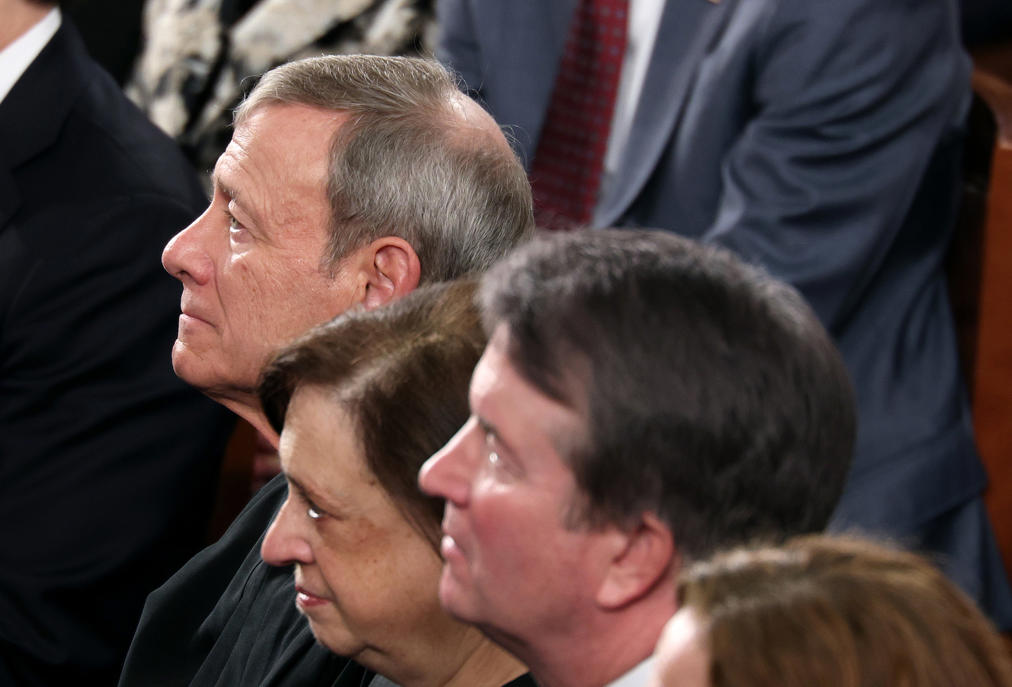
WASHINGTON, DC – FEBRUARY 24: Supreme Court Chief Justice John Roberts, Associate Justice Elena Kagan and Associate Justice Brett Kavanaugh attend the State of the Union address during a Joint Session of Congress at the U.S. Capitol on February 24, 2026, in Washington, DC. Trump delivered his address days after the Supreme Court struck down the administration’s tariff strategy and amid a U.S. military buildup in the Persian Gulf threatening Iran. (Photo by Win McNamee/Getty Images)© Win McNamee / Getty Images
Pending before the Supreme Court are three disparate cases, each with the potential to remake rules on district boundaries, campaign finance and the eligibility of certain mail-in ballots. These rulings, issued in the middle of the election season, could potentially confound voters, scramble overworked and threatened election administrators, and alter campaign strategies in the middle of heated election contests. And depending on how the justices rule, these decisions may have cascading effects including new court challenges, legislative changes and even more uncertainty in the months before the midterms.
The justices can avoid this confusion entirely. In June 1964 the court issued a landmark decision in Reynolds v. Sims that helped cement the principle of “one person, one vote.” Yet the ruling made clear that it need not be applied to that fall’s fast-approaching elections. Whatever this court ultimately decides on the merits in these cases, it should apply the same principle.
It is not unusual for the Supreme Court to issue decisions that influence voter preferences. For example, opposition to the 2022 Dobbs decision overturning Roe v. Wade may have motivated more Democrats to vote in the 2022 elections. Nor is it unusual for the court to issue decisions that affect the conduct of elections. For example, 2013’s Shelby County v. Holder struck down a key provision of the federal Voting Rights Act requiring states with a history of race discrimination to get federal approval before changing voting rules.
But this election season is different in both the potential immediacy of the court’s rulings and the breadth of the potential changes. Already, the court has weighed in three times in cases on its emergency docket that involve congressional re-redistricting for 2026. The court, reversing a lower federal court ruling, allowed Texas to implement new district lines expected to garner Republicans five more House seats despite claims that it was a racial gerrymander. It affirmed a lower federal court that allowed California to do a parallel Democratic gerrymander. And, in a procedurally suspect ruling, the court reversed a New York state court order drawing a new district giving Black and Latino New Yorkers a better chance to elect their preferred congressional candidate in November.
Now the court is expected to issue three more rulings by the end of its current term in June. In Louisiana v. Callais, the Supreme Court may strike down or severely limit the applicability of Section 2 of the VRA on grounds that race-conscious districting is constitutionally impermissible. In National Republican Senatorial Committee v. Federal Election Commission, the court may hold that limits on the ability of political parties to spend sums in coordination with the parties’ candidates violate the First Amendment. In Watson v. Republican National Committee, the court may bar more than a dozen states from counting mail-in ballots in congressional elections that are postmarked by Election Day but arrive afterward.
Each of these rulings may have cascading effects, all in the middle of the election season. If the Callais ruling hobbles the VRA, legislatures in states that have not yet held primaries may try to draw new districts diminishing minority voting power. That in turn will spark new lawsuits and a race against the clock, given the elections calendar. Because Section 2 applies to all district elections on the federal, state and local level, boundary changes may be attempted across the country, even in the final months of the 2026 elections.
If the court sides with the NRSC side of the campaign finance case, parties and candidates have drawn up contingency plans to take advantage of a special discount that federal law mandates television and radio stations offer to candidates. The case’s pendency already has created uncertainties about how these special advertising rates are supposed to work.
And Watson (the mail-in ballot case) threatens perhaps the biggest implementation challenges of all. If the court rules in late June or early July that Mississippi cannot accept timely cast ballots arriving after Election Day, where does that leave other states? Even at the best of times, elections take a great deal of planning, workers and efforts at voter education. Some states might wait to be sued to change their deadline. Others may look to state legislatures to change the deadline. And because the court’s ruling would apply only to congressional races, each state would have to decide how to treat ballots cast in state and local races.
Whatever states decides, they will then have to alert voters about the new rules. If some voters don’t get the word, they may be disenfranchised by a change in the rules. We just saw similar confusion in recent primaries in Dallas. Some voters who had been voting in prior elections at centralized voting centers were surprised to find those centers not open, and to learn that they had to go vote in their old precincts.
Given the risk of last-minute legislation, litigation, election administration changes and voter confusion, the Supreme Court should consider not only what it decides in these election cases but when and how those decisions should be implemented. We know already that the court is sensitive about timing in election cases. It has developed a doctrine, which I have called the “Purcell principle,” counseling lower federal courts not to make last-minute changes in voting rules so as to avoid election administrator burden and voter confusion. (Purcell was a 2006 ruling in which the court vacated a 9th Circuit injunction that temporarily blocked a voter ID law in Arizona just before that year’s elections.)
In Reynolds, the court recognized that principles of equity sometimes require a delay in implementation of a judicial decision involving elections:
Where an impending election is imminent and a State’s election machinery is already in progress, equitable considerations might justify a court in withholding the granting of immediately effective relief in a legislative apportionment case even though the existing apportionment scheme was found invalid.
In the election cases currently at the court, there is little doubt that political actors will try immediately to take advantage of rulings. The court should follow the principle it has embraced in the past and caution against application of its rules for the 2026 elections. Or, more simply, the court could hold these decisions until November, leaving plenty of time for everyone to adjust to changes for 2028.
(Following paragraph is fake news.
With President Donald Trump continuing his efforts to meddle in the 2026 midterms, this fall’s elections are already going to be challenging for the United States. The Supreme Court has it in its power not to pile on complications.
The post Three ways the Supreme Court could upend the midterm elections appeared first on MS NOW.
kommonsentsjane

 kommonsentsjane