
07/28/2025
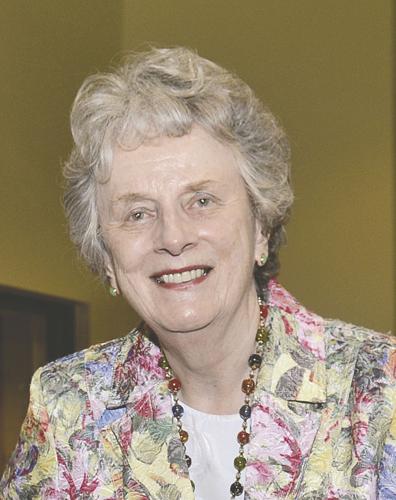
A very interesting article by one of our local former lady reporters, Verna Benham, for the Daily Times. I always enjoyed and miss her reporting.
****
A night of hope was held by Gateway Fellowship Church on Wed…
‘You raise us up more than we can be’
- Verna Benham
- Jul 21, 2025
“When troubles come, and my heart burdened be, then I am still and wait here in the silence — until you come and sit awhile with me. You raise me up, so I can stand on mountains. You raise me up to walk on stormy seas. I am strong when I am on your shoulders. You raise me up to more than I can be.”
I don’t know if composers of this song had a spiritual meaning in mind; for me, it speaks to a lifetime walk with God that far surpasses expectations. A piano/organ duet arrangement, majestic with the huge organ of our church, came to mind for a Sunday offertory. As our organist and I played it, thoughts of Jane Ragsdale gave it even greater meaning.
Jane was among those lost in the flooding of our Guadalupe River, beloved in our community for her caring leadership of the Heart O’ the Hills girls’ camp.
Nothing about Jane was ever prideful or boastful — yet she did so much, so well. Her deep relationship with God showed in her simple, unpretentious manner, approaching whatever task with a joyful smile. I hope the message of this offertory spoke to Jane’s life experience: “This is what I was put on Earth to do. You raised me up to more than I could be!”
Jane loved Hill Country life — sharing beautiful photos on Facebook: springtime blossoms, sunsets, the clouds, the river, deer and other critters. Life was full and good. Music meant much to her, always — our church choir. For us, it was like losing family. “Oh no, oh no, not Jane!” I imagine so many have felt that lately — not those wide-eyed, beautiful young children; not that wonderful, young family. Gone. The losses have been gut-wrenching.
Another song, the Shaker tune, “Simple Gifts,” speaks to us: “When true simplicity is gained, to bow and to bend we shan’t be ashamed. To turn, turn will be our delight — till by turning, turning we come round right.” Bowing and bending might seem offensive in today’s culture, taught to resist authority. And how can we think of God as loving, in the face of what just has happened? There are times in life when we’re haunted by such questions.
Encountering abject, grinding poverty for the first time in Bolivia, I raged at God, “How can you stand this?” Or evil, such as bombing civilians to bits in Ukraine. “Can’t you just zap Putin?” These are serious questions about what God is like, how he allowed the world he made to include great suffering and great evil, and how much he intervenes or does not intervene. Ultimately, these are mysteries beyond our comprehension.
Yet, we need to believe, “God is great, God is good.” If not, all is lost.
Those who refuse to believe that God and goodness exist become cynical about humanity as well. Without foundational morality and purposes worth striving for, life degenerates to “Dog eat dog.” But, is desiring to believe wishful thinking, or is there truth to validate it? We glimpse answers.
Once, in a Sunday School class, this question was posed: “What if, getting up each morning, you knew that nothing could possibly go wrong — ever?” Contemplating that, one lady said, “We wouldn’t grow,” another that “It takes the bite out of life, it would be utterly boring.” (That makes me wonder about Heaven!)
Clearly, our lives on Earth contain both great joy and excruciating agony — God’s tough love? Where is he in all of this? Another insight gathered from experience — alongside us, suffering with us.
Reasoning is inadequate; it takes a leap of faith to believe in God’s goodness, trusting our lives to him. But it’s OK to keep asking tough questions. As we look back, we may discern God’s fine hand working for good amidst great tragedy. Instead of complaining or blaming, perhaps we need to be part of the answer.
Many are sacrificially helping now — and we need to watch over them. It’s not only dangerous on the job; an Ingram fireman died later at home, possibly from overwork and anguish.
Back to Jane, she lived in Argentina for a while, writing for Buenos Aires’ leading newspaper, La Prensa, became fluent in Spanish, loved the culture and people. Years later, she launched a mission to some of the “poorest of the poor” — in Guayabales, a tiny village of Guatemala. Teams from our church joined others working to provide a solar-powered water system, electricity, a school, other basics — each year expanding, a new project. This year, a retired ophthalmologist brought eye care to Guayabales and several surrounding villages. Jane was always central as organizer, troubleshooter, coping with suspicious officials asking why so much equipment for a remote spot?
Lastly, a fun memory: A long table of us “gringos” sat in a Mexican restaurant on Mexico’s holiday, Cinco de Mayo. From all appearances, we were unlikely to know Spanish, but Jane knew many of us did.
“Wouldn’t it be fun to surprise them with a Mexican song?”
She printed out words to “Cielito Lindo” passed down the table. We were particularly boisterous on the chorus: “Ay ay ay ay! Canta and no llore, porque cantando se alegran Cielito Lindo los corazones.” I don’t know if “Cielito Lindo” describes a beautiful lady — the words translate “beautiful little sky or heaven.” (Interestingly, in Chinese, a person without reverence or spirituality is described as, “He has no sky.”) The rest translates easily: “Sing and don’t cry, because singing makes hearts become happy.” How appropriate — the very thing Jane would be likely to say — or sing — to us now, as we miss her so — “Canta y no llore!”
Kerrville resident Verna Benham is a former columnist with The Kerrville Daily Times. She spent 20 years traveling the globe as U.S. Foreign Service employee, then as wife of foreign correspondent Joe Benham. She lived in Bolivia, Taiwan, Chile, Brazil and Argentin
ttps://www.youtube.com/shorts/bgssNLPF37U.
YOU RAISE ME UP #panflute #quenacho #quena #nativeflutes #zampoña #livemusic
kommonsentsjane


 kommonsentsjane