
07/11/2025
ttps://www.msn.com/en-us/weather/topstories/how-10-inches-of-rain-turned-into-a-deadly-30-foot-wall-of-water-in-kerr-county/ar-AA1Il1g5?ocid=msedgdhp&pc=U531&cvid=27d888e36a8e4b69b346338c4340265a&ei=17
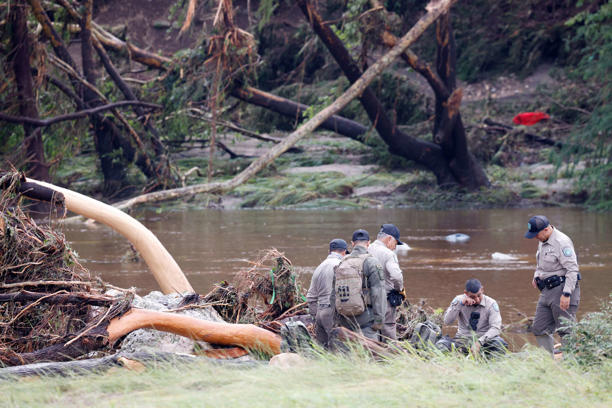
Law enforcement officers gather along the Guadalupe River, Saturday, July 5, 2025, in Hunt. A flash flood swept through the area early Friday morning.© Chitose Suzuki/The Dallas Morning News/TNS
More than 100 people in Texas have been found dead after devastating flooding swept through the area in the early morning hours of July 4. Among the victims were nearly 30 young girls and their counselors at Camp Mystic, an all-girls Christian summer camp.
At least 161 people are still missing in Kerr County alone, Gov. Abbott said earlier this week, for whom volunteers and first responders are still searching.
As families struggle to reckon with their losses, many Texans are still wondering how this flooding unfolded, why leaders didn’t expect it and whether it’s something that could happen again.
How the early hours of July 4 unfolded along the Guadalupe
Once the thunderstorms set up over the Texas Hill Country late on Thursday, July 3, they didn’t move for hours.
Greg Waller, a hydrologist at West Gulf River Forecast Center, said the stationary nature of the storms is part of what allowed them to dump so much water in one location. While rainfall totals across the region vary, Waller said some spots were up to 10 or 11 inches of water on Friday.
But the large amount of precipitation alone didn’t cause the river to crest at such heights. In fact, Waller said other parts of Texas got even more rain, but don’t have the same hydrologic conditions that can be found in Kerr County.
As the name might suggest, the Hill Country has many steep slopes which contribute to large amounts of runoff. The rocky nature of the soil also limits water absorption. Where it’s not rock, it’s clay, which Waller said can swell and act as another impermeable surface.
kommonsentsjane

 kommonsentsjane