
9/9/2024
Is it time to hit the refresher button?
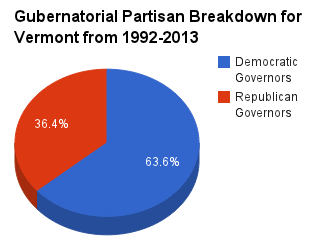
The people need to rethink the status of people in our government and how they keep getting elected when they are not effective. Bernie Sanders is a socialist. So how does he continue getting elected when the breakdown doesn’t show any socialists listed as voting?
The voters need to start re-evaluating these people who are not effective in their jobs. Our country needs people who can get things done and not rest on their laurels.
Senator Bernie Sanders
ttps://www.thedailybeast.com/what-bernie-sanders-really-got-done-in-his-29-years-in-congress
https://www.thedailybeast.com/what-bernie-sanders-really-got-done-in-his-29-years-in-congress
Isn’t it time for a new beginning for his state of Vermont.
Vermont Population 2024 – 647,818

Sanders’ rivals say he was a do-nothing loudmouth. His supporters say he was an uncompromising voice for democratic socialist ideals. They’re both wrong.
Sam Brodey
Sam Stei
Updated Mar. 02, 2020 12:38PM EST / Published Mar. 02, 2020 4:32AM EST
ttps://www.thedailybeast.com/what-bernie-sanders-really-got-done-in-his-29-years-in-congress
https://www.thedailybeast.com/what-bernie-sanders-really-got-done-in-his-29-years-in-congress
Over the past few weeks, Sen. Bernie Sanders’ (I-VT) presidential rivals have settled on a familiar line of attack against him: For all his talk of revolution, Bernie—they say—got painfully little done while in office.
“This crisis demands more than a senator who has good ideas,” said Sen. Elizabeth Warren (D-MA), in what was her sharpest rebuke of her ideological co-traveler to date, “but whose 30-year track record shows he consistently calls for things he fails to get done and consistently opposes things he nevertheless fails to stop.”
That line, like similar ones offered by former Vice President Joe Biden, was meant to undercut the notion that Sanders can deliver the big changes he’s promising. And, for the purposes of those making the accusation, it has the virtue of being statistically true. Of the 422 bills for which Sanders has been the lead sponsor during his nearly 30 years in Congress, only three have become law, according to Congress.gov. Two of them were perfunctory bills to name post offices.
“Sen. Sanders is not a team player,” one former lawmaker told The Daily Beast. “He is an ideologue, he is rigid, he is inflexible—he has a point of view that is locked down, and it’s not going to change; he’s not interested in compromise.” The Senate, said a former colleague of Sanders’, “is a place where almost everything is done with others. If you’re going to be effective and get things done, you have to work with others. That’s not Sen. Sanders’ typical style.”
Presented with these rebukes, Sanders has often bristled. During an appearance on 60 Minutes, he noted that he had passed more “bipartisan amendments” than anyone during his time in the House, and he pointed as well to his signature contribution to the Affordable Care Act—a provision providing for $11 billion in funding for community health centers. Effectiveness can be measured in a number of ways, Sanders told host Anderson Cooper: “Congress is a complicated place.”
Congress is, indeed, complicated. And so is Sanders’ legacy inside it.
On the surface, he appears to be just what Warren alleged: a man who served decades in office with little to show for it.
“He has really accomplished very little legislatively. He has accomplished a lot in terms of ideology. And that’s an important role.”
— former Rep. Barney Frank
But even some of his detractors concede that his impact cannot simply be measured in the number of bills passed. Whereas the vast majority of lawmakers have chosen to play the inside game—crafting compromises, extracting concessions, and leaning on leadership—to score legislative victories, Sanders, in the back end of his career, discovered that he could leverage power from the outside, using public spectacle, media ubiquity, and grassroots pressure campaigns to move the legislative debates in ways that he never was able to earlier in his career.
“He has really accomplished very little legislatively,” said former Rep. Barney Frank (D-MA), a consistent Sanders skeptic. “He has accomplished a lot in terms of ideology. And that’s an important role, to be the guy out there speaking.”
From conversations with over a dozen of Sanders’ current and former colleagues, former senior Democratic aides, and others who have closely followed him over time, what emerges is a picture of a lawmaker who can plausibly claim credit for major victories on Capitol Hill but who operates in a way that sets him totally apart: uncompromising, powered less by his relationships in the Capitol and more by his base of outside supporters, and, at the end of the day, focused on moving the conversation as much as moving legislation.
“People inside the Beltway, often, we think alike—we do the same shit over and over,” Rep. Mark Pocan (D-WI), a Sanders supporter, told The Daily Beast. “We don’t necessarily get a whole lot done, especially in the last decade or so. And I think, you know, the idea of building a movement of grassroots support for an issue, so that you can then influence legislators based on their constituents, is to me the smarter approach.”
“He hasn’t had anything done,” Pocan added sarcastically, “which is why every candidate now is talking about Medicare for All or universal health care.”
It wasn’t always this way. Early in his career, Sanders was widely regarded as an odd-duck backbencher who stood out as the lone self-identifying democratic socialist on Capitol Hill. For much of his career, the Vermonter was a peripheral player in Congress’ debates and power dynamics—particularly in the House, where he served from 1991 to 2007. His favored legislative tool was one that legislative rabble-rousers have often leaned on in the absence of better options: the amendment.
Sanders was so prolific at filing amendments that he was dubbed by some colleagues the “amendment king.” Often he’d find someone across the party aisles—usually fellow outsiders like former Rep. Ron Paul (R-TX)—to try to get those amendments passed. He found success, passing more amendments through roll-call votes in a Republican Congress than any other member. But as a 2005 Rolling Stone story detailed, Sanders’ often failed too. Many of his hard-won legislative achievements were usually stripped from the final versions of bills by party leaders who didn’t want to see his proposals become law. Between his years in the House and the Senate, Sanders filed over 500 amendments, with roughly one in five of them getting approved in a vote. Though not all of those were ultimately included on bills that became law, some important ones did: In 2001, Sanders got an amendment on a spending bill that prohibited goods made with child labor abroad from being imported to the U.S.
Some look back at Sanders’ “amendment king” mantle and see it as a sign of his ineffectiveness, not some mastery of the minutiae of the legislative process.
kommonsentsjane

 kommonsentsjane