
8/29/2024
How can we trust this administration when Google/Zuckerberg just spilled the beans on Biden/et al that they are COOKING THE BOOKS ON US!
What would you expect – a pat on the back?
We need a change in the present government – IT IS WOKE AND BROKE!
If Harris is elected – it will only get worse with her JOY/JOY which is a MIND GAME the left is playing on the people so that she doesn’t have to EXPOSE her WARES.
And, then, she goes back to being who she really is, A RADICAL, AND rakes in all of the marbles.
You can’t change a person’s stripes. She is what she is!
******
“‘Donald Trump being a bad guy (your fake news)’ is not actually a compelling response,” Strain said. “You guys gave market-moving information to financial institutions ahead of the public.”
This isn’t the first instance of an administration’s critics weaponizing BLS data for political purposes. A month before the 2012 presidential election, General Electric CEO Jack Welch accused the White House of manufacturing a drop in the unemployment rate to help President Barack Obama win reelection as the economy showed signs of improvement coming out from the Great Recession. Other critics then included Trump, who at the time called Welch “100 percent correct,” despite no evidence of BLS misconduct.
Attacks on the agency could have other serious consequences, economists say. Fewer people rely on data if they don’t trust it. And fewer businesses and households respond to the voluntary surveys that are used to gather BLS data if the agency’s legitimacy is in doubt. That could mean less-accurate data being widely used to set policy at a time when survey response rates are already in decline.
“If people think surveys aren’t reliable, then any sense of public service that drives them to respond is undermined,” Groshen said. “That weakens the ability of the statistical agencies to fulfill their mission. Trust is mission-critical.”
ttps://www.msn.com/en-us/money/markets/technical-error-caused-jobs-data-delay-that-sparked-outrage-bls-says/ar-AA1pB0Eb?ocid=msedgdhp&pc=U531&cvid=d2d4691a0c3240618cce9ccab43fe11d&ei=18
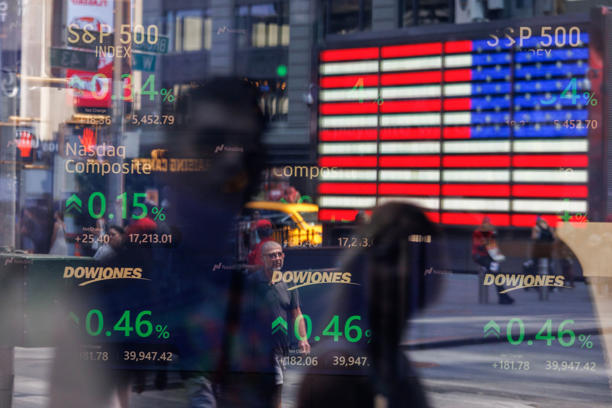
Technical error caused jobs data delay that sparked outrage, BLS says© Sarah Yenesel/EPA-EFE/Shutterstock
The Bureau of Labor Statistics said Wednesday that a technical issue caused delays last week in the scheduled release of jobs data that carried major implications for the economy and the presidential election.
A hitch related to time-stamping prevented the job revisions data from being released on time, according to information provided by the Labor Department, which the BLS is part of. Outside parties, the BLS said, then got the data because of a lack of communication within the agency over how to respond to public inquiries.
The agency has taken several steps since last week to prevent similar problems from occurring and notified the Labor Department’s Office of Inspector General, which may spark an investiga
The episode is at least the third in a series of missteps this year that critics argue may undermine faith in the agency.
Last week’s episode involved data closely watched by economists, Wall Street traders, and Federal Reserve officials who are keeping close tabs on employment as they prepare to cut interest rates. The lapse happened just days before the Fed sent its strongest signal yet that it was time to take pressure off the economy, in large part because officials fear that the labor market is softening — so financial markets were anticipating the release even more than usual.
The job revisions for last year and early 2024 appeared on a government website about a half-hour after their scheduled release time. But despite the delay, a handful of financial firms were able to obtain the information — which showed the largest downward revision to annual job creation in 15 years — before it was posted publicly.
 Related video: Latest job report sparks layoff anxiety among Americans (Scripps News
National correspondent Addie Guajardo joins us live.

Latest job report sparks layoff anxiety among Americans
The gaffe appeared to run counter to the nonpartisan statistical agency’s long-standing policies intended to prevent individual stakeholders, particularly financial traders, from gaining any edge by ensuring that information is made widely accessible to everyone at the same time.
Reactions outside the agency included confusion, indignation and conspiracy theories, though it’s unclear that the delay had any impact on financial trading. By the end of the day, what started with exasperated data wonks frantically refreshing the BLS website had cascaded into an attack from Republican presidential nominee Donald Trump, who claimed without evidence that the agency was manipulating statistics to help Vice President Kamala Harris’s Democratic presidential campaign.
The agency “really needs to work on making sure that they’ve got everything working properly because the next release could be very important, and that would be a big problem,” said Mark Zandi, chief economist at Moody’s Analytics.
Earlier this year, the BLS unintentionally posted crucial inflation data online some 30 minutes before its scheduled release. In a separate incident, a Labor Department employee sent out information on housing inflation — one of the most closely watched indicators among market players and economists — to a group addressed as “super users,” including Wall Street analysts.
That incident provoked anger from Wall Street and Republican lawmakers; Sen. Bill Cassidy (R-La.) called the episode “unacceptable.” But the Labor Department denies that there is a defined “super users” list that gets perks separate from the public, saying the employee used those words in an email without approval.
Still, the incident underscored the ways in which market-moving data can get disseminated. Joe Brusuelas, chief economist at RSM, said there is an inherent advantage for people steeped in the world of “lightning-fast data feeds and algorithmic trading” over those who aren’t.
“We’ve got a highly inconsistent method in which the data is disseminated to the public, which provides an advantage to systemically important financial institutions,” Brusuelas said.
Last week, as the public waited for the data release past the scheduled time of 10 a.m. Eastern time, multiple firms called the BLS and were able to ask questions by phone or email. It is typical for staffers to help people — such as financial analysts, consultants, researchers and journalists — make sense of releases or clarify lingering questions. But that is not meant to happen before the website updates.
According to information shared by the Labor Department, once BLS staffers discovered that the data release did not copy to the web server, IT workers uploaded it manually. That allowed them to see it on the BLS’s website at 10:10 a.m. — but the site didn’t update for external users until about 10:32 a.m. Still, some BLS employees who had the data shared it before then with outside parties.
Typically, the BLS has several backup plans for news releases of key economic information, including social media posts and data loaded on a public database. But last week’s preliminary announcement of an annual benchmark did not require that backup because it’s considered a web release, not a formal news release, according to information from the Labor Department.
Now the agency is reviewing all scheduled data releases to make sure they all get the same protocols and safeguards — and will ensure going forward that each data release has multiple forms of distribution, including social media, the agency says.
To prevent information from leaking in the future, the agency also immediately implemented a new policy of requiring senior agency staff to verify that data is publicly available before responding to any outside inquiries. The agency is also updating protocols for improving awareness of future incidents and will announce more actions in the coming days.
Michael Horrigan, president of the Upjohn Institute for Employment Research, said after a dataset’s scheduled release time, staffers who discuss the information technically aren’t granting anyone early access.
“It was all after the official time of release,” said Horrigan, a 30-year veteran of the BLS. “What was unfortunate is they had an IT issue, which prevented it from going up” on time.
Erica Groshen, an economics adviser at Cornell University who led the BLS from 2013 to 2017, said that practice and recent missteps pointed to tensions at statistical agencies “between trying to be very responsive to users’ questions … and not providing more information to some people than to others.”
“As commissioner, the most common comment I got was, ‘Your staff is so great. We call them up and they connect us with the people who were generating the numbers. You guys provide the best customer service in the federal government,’” said Groshen. “Would we not want to not be providing that level of service?”
Keith Hall, who was BLS commissioner from 2008 to 2012, said the agency should consider being “more reluctant” to send data to individual parties.
“In the trade-off between being helpful and the risk of a non-level playing field, the non-level playing field needs to win,” Hall said. “They need to not run the risk of this happening again.”
It is unclear whether those who accessed the data early ultimately made a payoff. But it has happened before: In 1998, a staffer at a financial markets research firm discovered that jobs data potentially worth millions of dollars in trading value had been inadvertently posted a day early. Subsequent stock market gains were partly attributed to the early release, which showed slowing job growth that could prompt the Fed to further cut rates.
The repercussions of last week’s incident quickly reached the campaign trail, with Trump falsely telling a crowd of North Carolina rallygoers that the jobs numbers had been manipulated in a “massive scandal” meant to boost Harris.
Michael Strain, director of economic policy studies at the conservative American Enterprise Institute, said it was “imperative that the public trust the official government statistics and trust the federal statistical agencies.” Strain said Trump’s attacks on the agency were indefensible. But that doesn’t absolve the BLS from explaining what went wrong and how it intends to fix it, Strain said.
“‘Donald Trump being a bad guy’ is not actually a compelling response,” Strain said. “You guys gave market-moving information to financial institutions ahead of the public.”
This isn’t the first instance of an administration’s critics weaponizing BLS data for political purposes. A month before the 2012 presidential election, General Electric CEO Jack Welch accused the White House of manufacturing a drop in the unemployment rate to help President Barack Obama win reelection as the economy showed signs of improvement coming out from the Great Recession. Other critics then included Trump, who at the time called Welch “100 percent correct,” despite no evidence of BLS misconduct.
Attacks on the agency could have other serious consequences, economists say. Fewer people rely on data if they don’t trust it. And fewer businesses and households respond to the voluntary surveys that are used to gather BLS data if the agency’s legitimacy is in doubt. That could mean less-accurate data being widely used to set policy at a time when survey response rates are already in decline.
“If people think surveys aren’t reliable, then any sense of public service that drives them to respond is undermined,” Groshen said. “That weakens the ability of the statistical agencies to fulfill their mission. Trust is mission-critical.”
****
How could anyone trust the left/Biden/Harris/Pelosi/Obama with what they have put on the people?
There isn’t a landfill large enough for all of this corruption/lies since Bush I?
kommonsentsjane

 kommonsentsjane