
7/28/2024
REALLY?
It seems that death and taxes are the way of our cities. In the U.S. some states/cities are now taxing people for rain water run off on their property.
Maryland’s “Rain Tax”
From Wikipedia, the free encyclopedia
Maryland’s “rain tax” was implemented in 2012 through the Watershed Protection and Restoration Act to fund stormwater management aiming to reduce the level of pollution in the Chesapeake Bay. This bill, HB 987, utilized a stormwater fee in the ten most urban jurisdictions in Maryland.
Background
[edit]
The first stormwater fee nationwide was enacted in Washington in 1974.[1] There are now nearly 1,500 jurisdictions with similar policies to address stormwater management.[2] Numerous counties in Maryland have implemented fees and programs to address polluted runoff since the 1980s.[2] In 2010, the U.S. EPA ordered the states in the Chesapeake Bay watershed to reduce stormwater runoff through independent funding methods.[3] Maryland voted to use stormwater fees to cover the $14.8 billion cost.[3]
The “Rain Tax”
[edit]
The “rain tax” raised revenue to improve the stormwater management system while creating a financial incentive to minimize the construction of and replace current impervious surfaces.[4] Collection of the stormwater fee on impervious surfaces varied from annually on the property tax bill to quarterly on the water bill.[3] The rates and number of square feet used to calculate the Equivalent Residential Unit were set by local officials across the ten jurisdictions to adequately finance the work needed to meet the targets of the Chesapeake Clean Water Blueprint.[5] The revenue collected was used to maintain and repair the stormwater infrastructure to reduce pollution, improve water quality, and enhance the livability of these jurisdictions.[2]
****

- Home
- Take Care of Texas Blog
- Is Rainwater Harvesting Ill…
Take Care of Texas Blog
Thu, Jun 23, 2022
Author: Take Care of Texas
Is Rainwater Harvesting Illegal in Texas?
Rainwater harvesting is good for your wallet and the environment! Efficient use of water is critical in Texas because of its growing population and limited water supply. Even if you live in an area with minimal rainfall, you can still conserve precious water, save money, and prevent flooding and erosion.

Statewide Support for Rainwater Harvesting
Texas has several laws that support rainwater harvesting.
- Texas Property Code prevents a homeowner’s association from prohibiting the use of rainwater harvesting systems (Texas Property Code §202.007). (This law also promotes composting, efficient irrigation, and drought-resistant landscaping.)
- The state also requires certain new state facilities to incorporate rainwater harvesting systems in their design (Texas Government Code §447.004(c)(8)).
- Municipalities and counties are also encouraged to promote rainwater harvesting at residential, commercial, industrial, and educational facilities through incentives such as discounts for rain barrels or rebates for water storage facilities. (Texas Local Government Code §580.004).
- Many water-efficient products can be purchased tax-free during a specific weekend (usually around Memorial Day in late May) each year, including rainwater harvesting equipment. Check the State Comptroller’s webpage on this program for future tax holidays.
- Additionally, a municipality or county cannot deny a building permit solely because the facility will implement rainwater harvesting. However, it may require that the system comply with the minimum state standards established for such systems (Texas Local Government Code §580.004).
Visit the Texas Water Development Board’s website for more rainwater harvesting facts and FAQs.
Financial Incentives
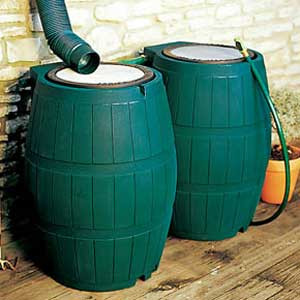
There are financial perks for purchasing and installing rainwater harvesting equipment. Before you buy, check with your local government or water utility to find out if there are incentives such as rebates, discounts, and tax exemptions available that can lower your costs. Some cities and counties offer rebates on rainwater harvesting systems or provide discounts on rain barrels.
The Texas Legislature allows the exemption of part or all of the assessed value of the property on which approved water conservation initiatives, such as rainwater harvesting, are made (Texas Tax Code §11.32). Individuals planning to install rainwater harvesting systems should check with their respective county appraisal districts for guidance on exemption from county property taxes.
In addition to local incentives, the Texas Tax Code 151.355 exempts rainwater harvesting equipment from sales tax. You will need Texas form 01-339 to complete this process.
Below we have compiled rebates, discounts, and guidance from cities in Texas. If you don’t see your city listed, check with your local government or water provider to find out if they offer any incentives.
- Allen
- Austin
- College Station
- Frisco
- Georgetown
- Hays County
- Horseshoe Bay
- Houston
- Irving
- League City
- Lewisville
- Lower Colorado River Authority—includes many central Texas areas
- Mansfield
- New Braunfels
- Panhandle Groundwater Conservation District
- Pflugerville
- Post Oak Savannah
- Round Rock
- Sunset Valley
- San Antonio Water System
- San Antonio River Authority
- San Marcos
- Tarrant County Regional Water District calendar of events
- Victoria County Groundwater Conservation District
- Wichita Falls
kommonsentsjane

 kommonsentsjane