
12/06/2023
Did James Carville stick his finger in an electrical plug again? Remember him from the Bill Clinton era?
By the way, Carville, you are a nationalist not a Christian nationalism.
If you are a nationalist and are suppose to have some morals – why didn’t you help Clinton and his blue dress before it happened?
This Carville guy should have been a commedian instead of a politician.
How can you take him seriously – I never did? I thought he was supposed to make Democrats laugh?
https://www.cnn.com/2015/07/02/living/america-christian-nation/index.html
ttps://www.cnn.com/2015/07/02/living/america-christian-nation/index.htmls://www.christianitytoday.com/ct/2021/february-web-only/what-is-christian-natio
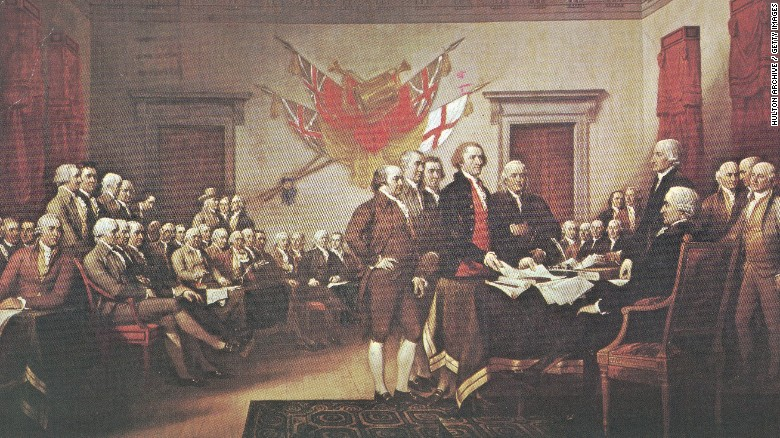
Was America founded as a Christian nation? – CNN
*****

I know these people because I’m a Christian nationalism,
James Carville attacks Speaker Mike Johnson, says he’s a ‘bigger threat’ to US than ‘al-Qaeda’.
Democratic strategist James Carville sounded the alarm on new Republican House Speaker Mike Johnson, saying he and other “Christian nationalists” are a bigger threat to the country than al-Qaeda.
Appearing as a panelist on Bill Maher’s “Overtime” segment, Carville was asked about Johnson, who is from his home state of Louisiana.
12/06/2023
ttps://www.christianitytoday.com/ct/2021/february-web-only/what-is-christian-nationalism.html
What Is Christian Nationalism?
An explainer on how the belief differs from other forms of nationalism, patriotism, and Christianity.
PAUL D. MILLER|
Image: Illustration by Mallory Rentsch / Source Images: Cameron Smith / Mohammad Aqhib / Unsplash / Reza Estakhrian .
You’ve probably seen headlines recently about the evils of Christian nationalism, especially since December’s Jericho March in Washington, DC, and since a mob of Trump supporters—many sporting Christian signs, slogans, or symbols—rioted and stormed the US Capitol building on January 6.
What is Christian nationalism, and how is it different from Christianity? How is it different from patriotism? How should Christians think about nations, especially about the United States? If nationalism is bad, does that mean we should reject nationality and national loyalty altogether?
What is patriotism, and is it good?
Patriotism is the love of country. It is different from nationalism, which is an argument about how to define our country. Christians should recognize that patriotism is good because all of God’s creation is good and patriotism helps us appreciate our particular place in it. Our affection and loyalty to a specific part of God’s creation helps us do the good work of cultivating and improving the part we happen to live in. As Christians, we can and should love the United States—which also means working to improve our country by holding it up for critique and working for justice when it errs.
What is nationalism?
There are many definitions of nationalism and an active debate about how best to define it. I reviewed the standard academic literature on nationalism and found several recurring themes. Most scholars agree that nationalism starts with the belief that humanity is divisible into mutually distinct, internally coherent cultural groups defined by shared traits like language, religion, ethnicity, or culture. From there, scholars say, nationalists believe that these groups should each have their own governments; that governments should promote and protect a nation’s cultural identity; and that sovereign national groups provide meaning and purpose for human beings.
What is Christian nationalism?
Christian nationalism is the belief that the American nation is defined by Christianity, and that the government should take active steps to keep it that way. Popularly, Christian nationalists assert that America is and must remain a “Christian nation”—not merely as an observation about American history, but as a prescriptive program for what America must continue to be in the future. Scholars like Samuel Huntington have made a similar argument: that America is defined by its “Anglo-Protestant” past and that we will lose our identity and our freedom if we do not preserve our cultural inheritance.
Christian nationalists do not reject the First Amendment and do not advocate for theocracy, but they do believe that Christianity should enjoy a privileged position in the public square. The term “Christian nationalism,” is relatively new, and its advocates generally do not use it of themselves, but it accurately describes American nationalists who believe American identity is inextricable from Christianity.
What is the problem with nationalism?
Humanity is not easily divisible into mutually distinct cultural units. Cultures overlap and their borders are fuzzy. Since cultural units are fuzzy, they make a poor fit as the foundation for political order. Cultural identities are fluid and hard to draw boundaries around, but political boundaries are hard and semipermanent. Attempting to found political legitimacy on cultural likeness means political order will constantly be in danger of being felt as illegitimate by some group or other. Cultural pluralism is essentially inevitable in every nation.
Is that really a problem, or just an abstract worry?
It is a serious problem. When nationalists go about constructing their nation, they have to define who is, and who is not, part of the nation. But there are always dissidents and minorities who do not or cannot conform to the nationalists’ preferred cultural template. In the absence of moral authority, nationalists can only establish themselves by force. Scholars are almost unanimous that nationalist governments tend to become authoritarian and oppressive in practice. For example, in past generations, to the extent that the United States had a quasi-established official religion of Protestantism, it did not respect true religious freedom. Worse, the United States and many individual states used Christianity as a prop to support slavery and segregation.
What do Christian nationalists want that is different from normal Christian engagement in politics?
Christian nationalists want to define America as a Christian nation and they want the government to promote a specific cultural template as the official culture of the country. Some have advocated for an amendment to the Constitution to recognize America’s Christian heritage, others to reinstitute prayer in public schools. Some work to enshrine a Christian nationalist interpretation of American history in school curricula, including that America has a special relationship with God or has been “chosen” by him to carry out a special mission on earth. Others advocate for immigration restrictions specifically to prevent a change to American religious and ethnic demographics or a change to American culture. Some want to empower the government to take stronger action to circumscribe immoral behavior.
Article continues below
Some—again, like the scholar Samuel Huntington—have argued that the United States government must defend and enshrine its predominant “Anglo-Protestant” culture to ensure the survival of American democracy. And sometimes Christian nationalism is most evident not in its political agenda, but in the sort of attitude with which it is held: an unstated presumption that Christians are entitled to primacy of place in the public square because they are heirs of the true or essential heritage of American culture, that Christians have a presumptive right to define the meaning of the American experiment because they see themselves as America’s architects, first citizens, and guardians.
How is this dangerous for America?
Christian nationalism tends to treat other Americans as second-class citizens. If it were fully implemented, it would not respect the full religious liberty of all Americans. Empowering the state through “morals legislation” to regulate conduct always carries the risk of overreaching, setting a bad precedent, and creating governing powers that could be used later be used against Christians. Additionally, Christian nationalism is an ideology held overwhelmingly by white Americans, and it thus tends to exacerbate racial and ethnic cleavages. In recent years, the movement has grown increasingly characterized by fear and by a belief that Christians are victims of persecution. Some are beginning to argue that American Christians need to prepare to fight, physically, to preserve America’s identity, an argument that played into the January 6 riot.
How is Christian nationalism dangerous to the church?
Christian nationalism takes the name of Christ for a worldly political agenda, proclaiming that its program is the political program for every true believer. That is wrong in principle, no matter what the agenda is, because only the church is authorized to proclaim the name of Jesus and carry his standard into the world. It is even worse with a political movement that champions some causes that are unjust, which is the case with Christian nationalism and its attendant illiberalism. In that case, Christian nationalism is calling evil good and good evil; it is taking the name of Christ as a fig leaf to cover its political program, treating the message of Jesus as a tool of political propaganda and the church as the handmaiden and cheerleader of the state.
Article continues below
How is Christianity different from Christian nationalism?
Christianity is a religion focused on the person and work of Jesus Christ as defined by the Christian Bible and the Apostles’ and Nicene Creeds. It is the gathering of people “from every nation and tribe and people and language,” who worship Jesus (Rev. 7:9), a faith that unites Jews and Greeks, Americans and non-Americans together. Christianity is political, in the sense that its adherents have always understood their faith to challenge, affect, and transcend their worldly loyalties—but there is no single view on what political implications flow from Christian faith other than that we should “fear God, honor the king” (1 Pet. 2:17, NASB), pay our taxes, love our neighbors, and seek justice.
Christian nationalism is, by contrast, a political ideology focused on the national identity of the United States. It includes a specific understanding of American history and American government that are, obviously, extrabiblical—an understanding that is contested by many historians and political scientists. Most importantly, Christian nationalism includes specific policy prescriptions that it claims are biblical but are, at best, extrapolations from biblical principles and, at worst, contradictory to them.
Can Christians be politically engaged without being Christian nationalists?
Yes. American Christians in the past were exemplary in helping establish the American experiment, and many American Christians worked to end slavery and segregation and other evils. They did so because they believed Christianity required them to work for justice. But they worked to advance Christian principles, not Christian power or Christian culture, which is the key distinction between normal Christian political engagement and Christian nationalism. Normal Christian political engagement is humble, loving, and sacrificial; it rejects the idea that Christians are entitled to primacy of place in the public square or that Christians have a presumptive right to continue their historical predominance in American culture. Today, Christians should seek to love their neighbors by pursuing justice in the public square, including by working against abortion, promoting religious liberty, fostering racial justice, protecting the rule of law, and honoring constitutional processes. That agenda is different from promoting Christian culture, Western heritage, or Anglo-Protestant values.
*****
Was America founded as a Christian nation?
ttps://www.cnn.com/2015/07/02/living/america-christian-nation/index.htmls://www.christianitytoday.com/ct/2021/february-web-only/what-is-christian-natio
Just add an ‘h\ to the above to see.
Was America founded as a Christian nation? – CNN
By Mark Edwards
Updated 10:22 AM ET, Sat July 4, 2015

Photos: Early U.S. history
The Declaration of Independence and the U.S. Constitution were both debated and adopted in Philadelphia’s Independence Hall. Nearby is the cracked Liberty Bell, which reads “Proclaim liberty throughout all the land onto all the inhabitant thereof.” The bell and its inscription were later used as a rallying cry for the abolitionist and women’s suffrage movements.
Hide Caption
5 of 8

Photos: Early U.S. history
Thomas Paine published “Common Sense” in 1776. It was written in a plain style meant to convince the “common people” of the colonies to support the independence movement. The pamphlet was wildly popular, with founding father John Adams remarking that, “Without the pen of the author of Common Sense, the sword of Washington would have been raised in vain.”
Hide Caption
6 of 8

Photos: Early U.S. history
Benjamin Franklin was an author, publisher, ambassador, inventor, political theorist and scientist. While arguably one of the most Influential founding fathers, he never ran for President and died early in George Washington’s first term.
Hide Caption
7 of 8

Photos: Early U.S. history
Enraged by the British Parliament’s tax on tea, rebel colonists, some disguised as Native Americans, destroyed an entire East India Company tea shipment in the Boston Harbor. The British government responded with a crackdown on self-government in the colonies, which liberty-seeking colonists called the “Intolerable Act.” Rising tensions sparked the American Revolution in 1775.
Hide Caption
8 of 8
Photos: Early U.S. history
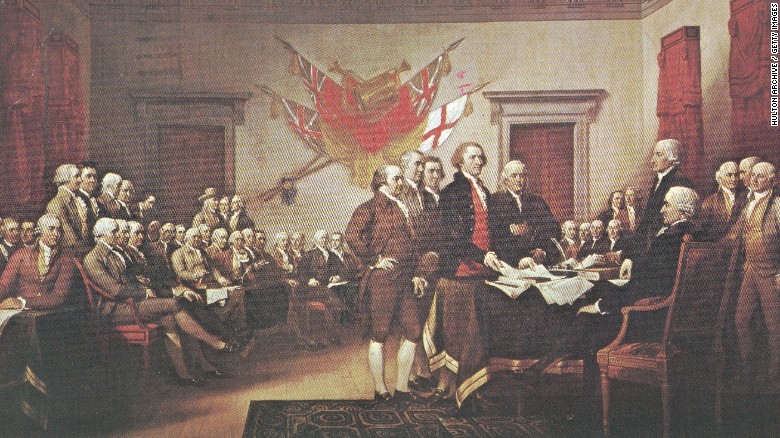
The Enlightenment movement, which questioned traditional authority and embraced rationalism, heavily influenced The Declaration of Independence. In breaking away from Great Britain, Thomas Jefferson called on the “certain unalienable rights” of “life, liberty and the pursuit of happiness.” These rights varied only slightly from the rights of “life, liberty and property” British philosopher John Locke laid out in his 1689 “Two Treatises of Government.”
Hide Caption
1 of 8

Photos: Early U.S. history
The Bill of Rights, the first 10 amendments added to the U.S. Constitution, were meant to put specific limits on government power. The early U.S. government was split into two factions: the Federalists, who supported a strong national government, and the Anti-Federalists, who feared centralized government. The Bill of Rights were added as part of a compromise between the sparring parties.
Hide Caption
2 of 8

Photos: Early U.S. history
Thomas Jefferson was the main author of the Declaration of Independence and the nation’s third President. He was also deeply interested in science, philosophy and architecture. He designed his own gravestone and insisted that it read, “Here was buried, Thomas Jefferson, Author of the Declaration of American Independence of the Statute of Virginia for religious freedom & Father of the University of Virginia.”
Hide Caption
3 of 8

Photos: Early U.S. history
John Hancock is best known for his extravagant signature on the Declaration of Independence, which he was the first to sign. However, Hancock was also a key figure in early revolutionary politics and one of the richest men in New England.
Hide Caption
4 of 8

Photos: Early U.S. history
The Declaration of Independence and the U.S. Constitution were both debated and adopted in Philadelphia’s Independence Hall. Nearby is the cracked Liberty Bell, which reads “Proclaim liberty throughout all the land onto all the inhabitant thereof.” The bell and its inscription were later used as a rallying cry for the abolitionist and women’s suffrage movements.
Hide Caption
5 of 8

Photos: Early U.S. history
Thomas Paine published “Common Sense” in 1776. It was written in a plain style meant to convince the “common people” of the colonies to support the independence movement. The pamphlet was wildly popular, with founding father John Adams remarking that, “Without the pen of the author of Common Sense, the sword of Washington would have been raised in vain.”
Hide Caption
6 of 8

Photos: Early U.S. history
Benjamin Franklin was an author, publisher, ambassador, inventor, political theorist and scientist. While arguably one of the most Influential founding fathers, he never ran for President and died early in George Washington’s first term.
Hide Caption
7 of 8

Photos: Early U.S. history
Enraged by the British Parliament’s tax on tea, rebel colonists, some disguised as Native Americans, destroyed an entire East India Company tea shipment in the Boston Harbor. The British government responded with a crackdown on self-government in the colonies, which liberty-seeking colonists called the “Intolerable Act.” Rising tensions sparked the American Revolution in 1775.
Hide Caption
8 of 8

Photos: Early U.S. history
The Enlightenment movement, which questioned traditional authority and embraced rationalism, heavily influenced The Declaration of Independence. In breaking away from Great Britain, Thomas Jefferson called on the “certain unalienable rights” of “life, liberty and the pursuit of happiness.” These rights varied only slightly from the rights of “life, liberty and property” British philosopher John Locke laid out in his 1689 “Two Treatises of Government.”
Hide Caption
1 of 8

Photos: Early U.S. history
The Bill of Rights, the first 10 amendments added to the U.S. Constitution, were meant to put specific limits on government power. The early U.S. government was split into two factions: the Federalists, who supported a strong national government, and the Anti-Federalists, who feared centralized government. The Bill of Rights were added as part of a compromise between the sparring parties.
Hide Caption
2 of 8

Photos: Early U.S. history
Thomas Jefferson was the main author of the Declaration of Independence and the nation’s third President. He was also deeply interested in science, philosophy and architecture. He designed his own gravestone and insisted that it read, “Here was buried, Thomas Jefferson, Author of the Declaration of American Independence of the Statute of Virginia for religious freedom & Father of the University of Virginia.”
Hide Caption
3 of 8

Photos: Early U.S. history
John Hancock is best known for his extravagant signature on the Declaration of Independence, which he was the first to sign. However, Hancock was also a key figure in early revolutionary politics and one of the richest men in New England.
Hide Caption
4 of 8


Mark Edwards teaches U.S. history and politics at Spring Arbor University in Michigan. He is the author of “The Right of the Protestant Left: God’s Totalitarianism.”
(CNN)Was America founded as a Christian nation?
That question has served a variety of political causes since July 4, 1776, from legalizing persecution and aiding runaway slaves to fighting Nazis and Communists.
The scholars below have spent years reflecting on the intersection of American religion and nationalism. Their answers to the question invite us to examine the motivations behind the controversy: Why do so many people think the country’s Christian history is so important?
Amanda Porterfield is a professor of religion at Florida State University. Her most recent book is “Conceived in Doubt: Religion and Politics in the New American Nation.”
If we are talking about 13 colonies belonging to the British Empire, whose king presided over an imperial church, then yes, British citizens residing in those colonies lived under Christian rule.
Those colonies were founded as outposts of a Christian nation. With American independence, however, the British monarchy lost control over its American subjects. Champions of American liberty then celebrated their religious as well as political independence.
In the popular pamphlet some historians credit with overcoming American hesitance about severing ties with Britain, “Common Sense,” Thomas Paine cheered freedom from the “degradation and lessening of ourselves” under British rule, proclaiming “monarchy in every instance” to be “the Popery of government.”
Hostile to the political theology of both the Catholic Church and Protestant kings, Paine celebrated a vision for America that reflected the democratic god of nature and reason.
Paine was more outspoken and less diplomatic in his religious skepticism than others.
Most notably, Thomas Jefferson sought common ground with Baptists who resented government establishment of religion. And Jefferson contributed voluntarily to his local parish after Virginia law no longer required him to do so, even though his own philosophic views were closer to atheism than Paine’s.
Jefferson explained his support for religious freedom in practical terms: “(I)t does me no injury for my neighbor to believe in twenty gods or no God. It neither picks my pocket nor breaks my leg.”
Outside New England, American churches at the time of the founding of the United States were relatively small and few in number, and many clerics were at least ambivalent about cutting ties with Britain.
Patriots suspected Methodists and Quakers of being British loyalists: Methodists because of their historic ties to the Church of England and Quakers because of their connections to British commerce. Rates of church membership declined in the revolutionary era and many church buildings, especially in the South, stood in need of repair.
While New England Congregational ministers preached sermons defending American political liberty, and Presbyterian ministers in the middle colonies made important contributions to ideas about republican government, enthusiasm for new birth in Christ was relatively low everywhere.
Soldiers in the Continental Army were notoriously irreverent. Free thought and even feminism rose in popularity.
Only after the violent attacks on religion in the French Revolution did alarm about the low level of religion in America escalate and enthusiasm for religion catch fire.
When deism and open ridicule of religion became popular among college students, physicians, and Western settlers in the 1790s, evangelical Christianity gained popularity as a reactive force against atheism and a source for new constructions of American nationhood.
Evangelical efforts to make America a Christian nation justified territorial expansion, while division over slavery solidified competing visions of Christian nationhood.
Today’s claims about America’s founding as a Christian nation derive from this 19th-century effort to overcome the skeptical reasoning and secular principles so important in the nation’s founding.
Steven K. Green teaches law and history at Willamette University in Salem, Oregon. He is the author of the recent book, “Inventing a Christian America: The Myth of the Religious Founding.”
If, by the question, one is asking whether the Founding Fathers relied on Protestant Christian principles in drafting the essential documents and in organizing the new governments, then the answer is a resounding “no.”
The writings of the period (1765-1790), including speeches, debates, letters, pamphlets, and even sermons, reflect the overwhelming influence of Enlightenment, Whig, and classical republican theories.
The political events of the period also support the conclusion that the founders intended to institute a secular-based form of governance.
In a short span of 16 years (1775-1791), the nation was transformed from maintaining religious establishments in nine of 13 colonies to achieving disestablishment at the national level and in 10 new states (or 11, depending on how one views Vermont).
At the same time, the United States became the first nation in history to abolish religious disqualifications from officeholding and civic engagement. The founders purposely created a nation that based its legitimacy on popular will, not on some higher power.
If one refines the question to ask whether the Founding Fathers were motivated to act as they did based on their Christian faith, the answer becomes a little murkier, but the response is still “no.”
Many of the leading founders were theological liberals who approached religion from a rational perspective.
Even though we have come to appreciate that other founders held more conventional Christian beliefs, all of them, including many clergy of the day, perceived little conflict between their religious faith and Enlightenment natural rights.
By the time of the Revolution, ideas of providence and of America’s millennial role had been modified, if not secularized, by Enlightenment rationalism.
If Benjamin Franklin, the only self-professed deist among the leading founders, could believe in God’s general providential plan for the United States, then the ubiquitous references to God’s interposing providence tell us little about the influence of distinctive religious thought on the founding generation.
If, finally, the meaning of the question is whether Christian impulses and rhetoric existed during the founding period and impacted the “great debate” about revolution and republican governance, then the answer is “yes” (although the question would then lose its distinctiveness at this level of abstraction).
Without question, non-Anglican clergy rallied to the patriot cause and justified the Revolution and new government on religious terms. Similarly, political leaders employed religious rhetoric to explain and legitimize their efforts.
However, the use of religious discourse at such a momentous time — for distinguishing one’s cause from the enemy during war and for rallying popular support for one’s side — is hardly surprising.
The majority of the founders also believed that religion was necessary for maintaining moral virtue and assumed that the nation would remain culturally Christian.
But people should be cautious about reading too much into the religious rhetoric during the founding period.
From where did the idea of America’s founding as a Christian nation arise? In a nutshell, it arose in the early 19th century as later generations of Americans sought to establish a national identity, one that distinguished and exemplified the founding by sanctifying the nation’s origins.
This is the origin of the “Christian nation” myth.
Kevin M. Kruse, professor of history at Princeton University, is author of the recent book “One Nation Under God: How Corporate America Invented Christian America.”
Demographically speaking, America certainly resembled a “nation of Christians” at the time of its founding and has ever since. But it’s a rather different proposition to claim that the founders established the new American government as a “Christian nation.” Clearly, they did not.
To be sure, the Declaration of Independence appealed to “the laws of Nature and Nature’s God” and asserted that all men had basic rights “endowed by their Creator.” But the Constitution — the document that actually enumerated and enshrined those rights — lacked even those vaguely drawn references to a deity.
The closest approximation came in its date, which was presented, in the standard style of the 18th century, “in the Year of our Lord.” (Even that lone mention was a late addition, as the draft voted on at the Constitutional Convention lacked any reference to the Lord.)
Meanwhile, in the text of the Constitution, religion was deliberately kept at arm’s length from the state. In radical departures from the era’s norms, there would be no religious tests for federal officeholders, no establishment of any national religion and no congressional interference with individual citizens’ free exercise of their own faith.
This was no accident. Despite their respect for religion and their belief in the divine origins of human rights, many of the Founding Fathers worried that religion would corrupt the state and, conversely, that the state would corrupt religion.
In his longest rumination on the topic in the Federalist Papers, for instance, James Madison challenged the idea that religion in politics would lead men to “cooperate for their common good” and asserted instead that it would make them “vex and oppress each other.”
Accordingly, Madison praised the new Constitution for keeping faith out of federal officeholding, which would welcome individuals “of every description, whether native or adoptive, whether young or old, and without regard to poverty or wealth, or to any particular profession of religious faith.”
If the founders had not made their stance on this “Christian nation” issue clear enough in the Constitution and the Federalist Papers, they certainly did in the 1797 Treaty of Tripoli.
Begun by George Washington, signed by John Adams and ratified unanimously by a Senate still half-filled with signers of the Constitution, this treaty announced firmly and flatly to the world that “the Government of the United States of America is not, in any sense, founded on the Christian religion.”
Despite the founders’ intent, later generations of Americans began to assert that the country they created was indeed Christian.
Though the idea originated in the early 19th century, it wasn’t until the mid-20th that it became a fixed part of politics and government.
During the 1950s, new slogans and ceremonies — rhetoric like “one nation under God” in the Pledge and “In God We Trust” as the national motto, as well as rites like the National Day of Prayer and National Prayer Breakfast — convinced many Americans that their country had been, and always would be, a formally Christian nation.
John Fea teaches history at Messiah College in Grantham, Pennsylvania. He is the author of “Was America Founded as a Christian Nation?: A Historical Introduction.”
Such a question is inevitably asking a historian to take a debate which did not reach any degree of intensity until the 1980s and superimpose it on the 18th-century world of the men who built the American republic.
The Founding Fathers lived in a world that was fundamentally different from our own. It was a world in which there was largely only one religious game in town — Christianity.
Yes, there were some tiny Jewish communities located in seaport towns, and it is likely that a form of Islam was practiced among African slaves, but much of the culture was defined by the powerful influence of Christianity, especially Protestant Christianity.
The founders also had very divergent views about the relationship between Christianity and the nation they were forging. As I tell my students, we need to stop treating them as a monolithic whole.
Thomas Jefferson and James Madison were strong advocates for the complete separation of church and state. John Adams and George Washington believed that religion was essential to the cultivation of a virtuous citizenry, an essential trait of any successful republic.
It is true that the founders, by virtue of the fact that they signed the Declaration of Independence, probably believed in a God who presided over nature, was the author of human rights, would one day judge the dead and governed the world by his providence.
Those who signed the United States Constitution endorsed the idea that there should be no religious test — Christian or otherwise — required to hold federal office.
Those responsible for the First Amendment also championed the free exercise of religion and rejected a government-sponsored church.
Yet anyone who wants to use the Declaration of Independence and the Constitution to argue against the importance of religion in the American founding must reckon with all those state constitutions — such as those of Pennsylvania, Massachusetts, and South Carolina — that require officeholders to affirm the inspiration of the Old and New Testaments, obey the Christian Sabbath or contribute tax money to support a state church.
It is clear that some of the founders wanted only Christians to be running their state governments. Other founders rejected the idea of the separation of church and state. Virginia rejected all test oaths and religious establishments.
History is complex. It does not conform easily to the kinds of “yes” or “no” answers that most Americans want when they ask whether America was founded a Christian nation.
Here’s a better question: Is America a Christian nation now?
On this question there is a lot more evidence to sustain a “no” answer.
Ray Haberski is a professor of history and American studies at Indiana University-Purdue University Indianapolis. His most recent book is “God and War: American Civil Religion since 1945.”
America was not founded as a Christian nation; take a look at the Constitution. The more interesting question is whether America is a Christian nation.
For the better part of its history, the United States and the most prominent form of Christianity in America, mainline Protestantism, were intertwined. Until relatively recently, almost every major issue had either Christian connotations or developed in opposition to Christian dominance.
People on opposing sides of slavery and the Civil War prayed to the same God. American imperialists deployed God to justify national expansion abroad, while American anti-imperialists employed God to challenge that expansion.
In educational systems across the nation and throughout American history, Americans have battled over the role that Christianity should play in the lives of their children and communities.
And in a litany of social policies, from prisons to the welfare state to abortion, Christianity shaped and informed debates.
Yet this is no longer the case. After World War II the national landscape changed, and the culture-shaping force that Christianity once exerted — through the political, financial and intellectual dominance of mainline Protestants — disappeared.
The decline of this group’s influence led to changes in the narratives Americans spun about their nation’s founding and its “essential” nature. On the national stage, archetypes changed: Billy Graham replaced Reinhold Niebuhr, a Catholic won the presidency, and Martin Luther King Jr. became a national hero.
New voices led to new movements, including the activism of the religious right, the prominence of what we call the “nones” and the remarkable changes in the perception of same-sex marriage.
A new national narrative emerged: one that no longer assumed America was Christian, but rather debated the Christian nature of the nation itself.
The moment that punctuated the end of Christian America was the 1984 publication of Richard John Neuhaus’ “The Naked Public Square.”
This book certified Neuhaus as a recognizable religious public intellectual and placed him at the center of a debate over the future of America’s religious heritage.
Once a Lutheran minister, Neuhaus converted to Catholicism in the early 1990s and was ordained a Roman Catholic priest. His personal history echoed the crisis profiled in his book: the decline of Protestant power within and over U.S. history had left the American public square stripped of a transcendent authority.
Politics, Neuhaus suggested again and again, “is unavoidably a moral concept, and that means the religiously grounded moral convictions of the American people cannot be excluded from the public square.”
Yet to the end of his life (he died in 2009), Neuhaus’ work was one of creation rather than affirmation or reclamation.
A culture warrior as well as priest and public intellectual, Neuhaus demonstrated with more clarity than any “village atheist” that the idea of Christian America was a fiction in search of believers.
****
My opinion – originally, the country was built as a Christian nation; but, in today’s world and the Democratic Party I would say ARE NOT.
Our country’s morals have degraded due to the influx of people. We have many different religions in the U.S. which is okay, in my eyes. But, the citizens have to stand up for our Constitution because many people do not believe in the Constitution and the citizens have to stand up for it because we do have people living in our country who are trying to change its values.
kommonsentsjane

 kommonsentsjane