
After reviewing this more extensively, it is necessary in the U.S. to incorporate this religion as one of many religions and quit advertising that no one can express their opinions about it. The only thing I can see that has put such a bad taste in the minds of people is 9/11 and the fact that Obama rammed this religion and these people down our throats for eight years and the same thing happened when Obama colluded with Germany, France, and Great Britain to turn the world upside down.
What Obama did to the U.S. in the name of his religion has caused more harm and the fact that he mixed religion with his administration – how could anyone not be upset. A black man who was given the confidence to run the country and then did what he did to the country by stealing and lying to the people and then trying to over throw the government should be in jail. Isn’t that the reason that people have such a view of Muslims and Islam due to their beliefs – can they be trusted?
Islam is not the only subject being criticized in the U.S. and writers have to quit being so sensitive and calling out any criticism . But, when we see the following in the U.S., it is a danger to our democracy and has to be called out:
https://www.dailywire.com/news/46764/watch-kids-philadelphia-muslim-society-we-will-ryan-saavedra
Even fair-minded and non-racist authors, websites, members of the media and others who present a rational critique of Islam end up being condemned as malicious racists and “Islamophobes.” The holders of Islam have taken criticism to an extreme. If that is going to be the baseline – then all religions should be held to the same standard in the U.S., not just one.
To make this work, they should be one of many religions not the only religion.
*********
Gatestone Institute
Religion vs. Free Speech
by Denis MacEoin
Dr. Denis MacEoin lectured in Arabic and Islamic Studies at the UK’s Newcastle University. He is the author of approximately 40 books and reports. He serves as a Distinguished Senior Fellow at the Gatestone Institute.
February 15, 2019 at 5:00 am
Religion vs Free Speech
◾Courts and government bodies still find it hard to make useful distinctions between gratuitous, racist, or violent speech about Islam and Muslims on the one hand, and reasoned argument that questions aspects of Islam, or even the religion overall, from the point of view of human rights, on the other.
◾The situation in Europe is even more ambiguous. Most European states have laws that purportedly support free speech, yet accusations of hate speech and Islamophobia often lead to trials and sentencing can lead to imprisonment. This skewing of facts is one crucial reason why free speech needs to be defended.
◾It is more than ever necessary to educate the public and many of its leaders about both the benign and troubling facts of Islamic history, doctrine, and culture. Those leaders who must require a more solid grounding include the ones who deny that terrorism has genuine links to issues such as jihad warfare — and who are constantly told that “real” Islam is above rebuke.
◾We must indeed paint a positive picture of what so many Muslims contribute to their host societies. We should, for example, celebrate the way in which Muslim-Americans in Philadelphia launched an appeal that raised over $100,000 to help repair two Jewish cemeteries that had been vandalized. Or the Muslim veteran in Arkansas who volunteered to stand guard with others at any Jewish site that was threatened with attack.
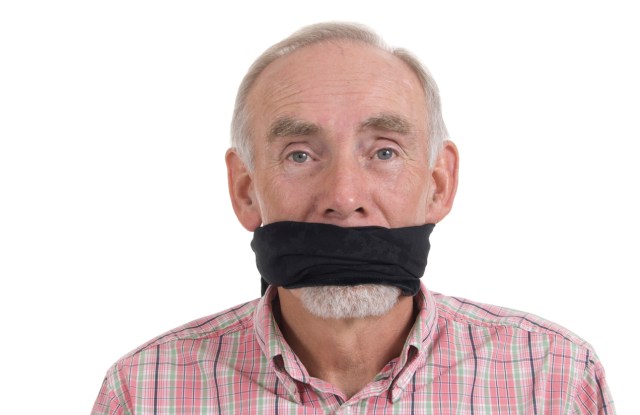
Even fair-minded and non-racist authors, websites, members of the media and others who present a rational critique of Islam end up being condemned as malicious racists and “Islamophobes.”
Speaking and writing about Islam today requires discretion, sensitivity, and a good grasp of facts. Doing this is harder in most European countries than it is in the United States, where the First Amendment insists on powerful free speech rights. The need for sensitivity stems from the almost universal condemnation of “Islamophobia”, a mainly good-hearted response to democratic worries that innocent Muslims may be targeted with violence or hate speech, even as many (but far from all) seek to integrate themselves and their families into Western society.
Raw Islamophobia, like raw prejudice by and against any group, is of course racist, unacceptable and most often expressed by hate groups on the far right of politics. At the same time, it is not surprising that many people will build their attitudes towards Muslims on a perception prompted by Islamist terror attacks, radical Muslim antagonism to Western societies, or uneasiness about Muslims who choose to dress in ways that do not conform to Western norms. The confusion caused also creates problems for many people who have reasonable concerns about Islam as a religion and a political ideology.
The problem is that even fair-minded and non-racist authors, websites, members of the media and others end up being tarred with the same brush and condemned as malicious racists themselves. This creates a distorted perception of what has been termed “two Islamophobias,” one hateful, the other respectable. The latter, of course, is not Islamophobia at all, any more than presenting a rational critique of any other religion, political thought, or ideology is racist, hate-driven or undemocratic.
That confusion between a hate-driven view of Islam and a thoughtful, unbiased criticism of it has led to restrictions on what may and what may not be written or said about Islam or Muslims, while politicians of all varieties, church leaders, and human rights activists have adopted a style of virtue-signalling that tells the world to be silent and accepting, or else they will be called racists or Islamophobes. This type of surrender might be understandable, but it has led many to say things in defence of Islam that are either not true or only partially true. That Islam is a “a religion of peace,” that Islamic terrorism “has nothing to do with Islam,” or that “Muslims are not anti-Semitic” are all popular claims which, at the very least, require further substantiation and informed debate. Insistence on such untruths or partial truths only serves to bring governments, the judiciary, the police, the media and many more into distrust and disrepute. This skewing of facts is one crucial reason why free speech needs to be defended. For years, many have strenuously spoken out against attempts to control and censor honest criticism – here, here or here.
Understandably, outright hatred, whether of Muslims, Christians or Jews — such as online threats to slaughter them or postings that call for terrorist attacks — are likely to fall within legal censure. Criticism of Islam, however, under so-called blasphemy laws, is condemned and forbidden virtually everywhere throughout the Muslim world. Bloggers and others who seek to cross those barriers are often arrested and imprisoned, flogged, murdered by mobs or executed by the state. In April 2017, a blasphemy charge was levelled against the Christian governor of Jakarta in Indonesia, Basuki Tjahaja Purname (Ahok). A court sentenced him to two years in prison for not being remorseful enough. Worse, false accusations of blasphemy are often levelled against innocent people as a means of settling personal scores, or to have people removed in order to seize their property.
The situation in Europe is even more ambiguous. Most European states have laws that purportedly support free speech, yet accusations of hate speech and Islamophobia often lead to trials — here, here and here — and sentencing can lead to imprisonment.
There is no hate speech law in the UK, but under a variety of government Acts, such as the 1986 Public Order Act, prosecutions for racist, sexist, anti-Semitic, or grossly anti-Muslim speech or behavior are possible. There are also paradoxes. The American author of more than 20 books, Robert Spencer, is not without a reasonable knowledge of Islamic matters, yet is banned from entering Britain, while Muslim hate preachers continue to be allowed in; in the UK, as in France, Denmark, Austria and elsewhere, it seems to be speech that merely questions political Islam that causes most confusion.
Courts and government bodies still find it hard to make useful distinctions between gratuitous, racist, or violent speech about Islam and Muslims on the one hand, and reasoned argument that questions aspects of Islam, or even the religion overall, from the point of view of human rights, on the other. Such questions come from different spheres, such as Christians, Jews, secularists, observant Muslims, reformist Muslims, human rights activists, among others. It is more than ever necessary to educate the public and many of its leaders about both the benign and troubling facts of Islamic history, doctrine, and culture. Those leaders who must require a more solid grounding include the ones who deny that terrorism has genuine links to issues such as jihad warfare — and who are constantly told that “real” Islam is above rebuke.
We must indeed paint a positive picture of what so many Muslims contribute to their host societies. We should, for example, celebrate the way in which Muslim-Americans in Philadelphia launched an appeal that raised over $100,000 to help repair two Jewish cemeteries that had been vandalized. Or the Muslim veteran in Arkansas who volunteered to stand guard with others at any Jewish site that was threatened with attack.
We must, however, never fear speaking out against Muslim extremists who express hatred for Jews and who quote verses from the Qur’an or incidents from Islamic history in support of their bias. We must do so in measured words, citing real cases of radical Muslim anti-Semitism or anti-Western sermons or calls for violence based on interpretations of shari’a law or Islamic scripture.
Ironically, if we speak out too forcefully, the result can be counterproductive, making it unlikely that the people we would like to convince in politics, the churches, the media, or the mainstream will agree with our views. The extremist nature of some anti-Muslim agitators in the UK, for example, has had the effect of making it hard for many people to take in what they say.
What happens, then, is the exact opposite of what real Islamophobes claim they want, instead causing serious concerns about Islam to be dismissed. It is probably more constructive for everyone who speaks and writes about Islam and Muslims to do so in a measured and well-informed way.
Trevor Phillips, “a son of immigrants”, the founding chair of Britain’s Equality and Human Rights Commission, and a man profoundly disillusioned by the failure of so many ethnic and religious groups to integrate into British society, wrote an essay, Race and Faith: The Deafening Silence, in which he denounces official failure to face up to the divisions that have opened up in the UK following widening levels of immigration and “superdiversity”. Phillips, long the country’s best-known defender of multiculturalism, says the collapse of positive diversity had been because of two things: silence about divisions and loud denials that any problems existed at all. Serious critics of Islam need to join their voices to Phillips’s, and others who tackle problems openly. To do that, we have to stand — as he has done — against all forms of extremism, both religious and secular.
kommonsentsjane

 kommonsentsjane