
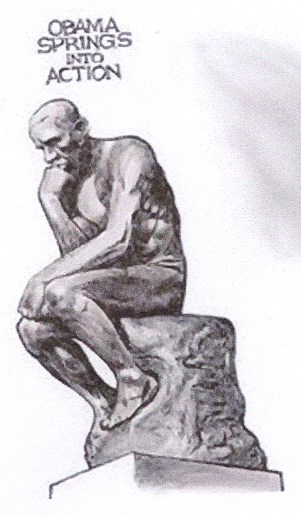
Obama has asked for billions of dollars, again, for the war in Syria even after his setback over the weekend. Surely, Congress will not give him any more money to fritter away. Congress has to be sure there is a strategy which is explained to the American people and Congress before another dime is spent on training and weaponry for Muslims. The leader keeps saying he is going to do all of these things and he never does them. Despite all of the bombings by the U.S. – it is still not helping. These Muslim people cannot be trusted to do the job that is needed. They are not fighters and when they get into a squeeze – they either run or holler, “Kings X,” and give up – which happened over the weekend. Obama stated he was sending 1,500 more troops to Syria which was nothing but a political move after the election loss. As we all know, you cannot send a boy to do a man’s job! If we intend to get anything accomplished, America will have to do the heavy lifting. Congress must have hearings to find out what the strategy is. We cannot continue this circus!
 Obama’s Syria strategy suffers a major setback
Moderate rebels who had been armed and trained by the United States either surrendered or defected to the extremists as the Jabhat al-Nusra group, affiliated with al-Qaeda, swept through the towns and villages the moderates controlled in the northern province of Idlib, in what appeared to be a concerted push to vanquish the moderate Free Syrian Army, according to rebel commanders, activists and analysts.

Other moderate fighters were on the run, headed for the Turkish border as the extremists closed in, heralding a significant defeat for the rebel forces Washington had been counting on as a bulwark against the Islamic State.
Moderates still retain a strong presence in southern Syria, but the Islamic State has not been a major factor there.
A White House spokesman said Sunday night that the Defense Department was best positioned to provide “a battlefield assessment of what these alleged reports mean for the current military campaign in Syria.” Defense officials did not immediately respond to queries about the significance of events on the ground over the weekend.
Jabhat al-Nusra has long been regarded by Syrians as less radical than the breakaway Islamic State faction, and it had participated alongside moderate rebels in battles against the Islamic State earlier this year. But it is also on the U.S. list of terrorist organizations and is the only group in Syria that has formally declared its allegiance to the mainstream al-Qaeda leadership.
A Jabhat al-Nusra base was one of the first targets hit when the United States launched its air war in Syria in September, and activists said the tensions fueled by that attack had contributed to the success of Jabhat al-Nusra’s push against the moderate rebels.
“When American airstrikes targeted al-Nusra, people felt solidarity with them because Nusra are fighting the regime, and the strikes are helping the regime,” said Raed al-Fares, an activist leader in the Idlib town of Kafr Nabel.
“Now people think that whoever in the Free Syrian Army gets support from the U.S.A. is an agent of the regime,” he said.
Fleeing rebel fighters said they feared the defeat would spell the end of the Free Syrian Army, the umbrella name used by the moderate rebel groups that the United States has somewhat erratically sought to promote as an alternative both to the Assad regime and the extremist Islamic State.
Among the groups whose bases were overrun in the assault was Harakat Hazm, the biggest recipient of U.S. assistance offered under a small-scale, covert CIA program launched earlier this year, including the first deliveries of U.S.-made TOW antitank missiles. The group’s headquarters outside the village of Khan Subbul was seized by Jabhat al-Nusra overnight Saturday, after rebel fighters there surrendered their weapons and fled without a fight, according to residents in the area.
Hussam Omar, a spokesman for Hazm, refused to confirm whether American weaponry had been captured by the al-Qaeda affiliate because, he said, negotiations are underway with Jabhat al-Nusra.
Hazm, whose name means steadfastness, had also received small arms and ammunition alongside non-lethal aid in the form of vehicles, food and uniforms from the United States and its European and Persian Gulf Arab allies grouped as the Friends of Syria alliance. Scores of its fighters had received U.S. training in Qatar under the covert program, but it was also not possible to confirm whether any of those fighters had defected to the Al Qaeda affiliate.
Another Western-backed group, the Syrian Revolutionary Front, on Saturday gave up its bases in Jabal Zawiya, a collection of mountain villages that had been under the control of the pro-American warlord Jamal Maarouf since 2012. A video posted on YouTube showed Jabhat al-Nusra fighters unearthing stockpiles of weaponry at Maarouf’s headquarters in his hometown of Deir Sunbul.
In a separate video, Maarouf, addressing the Jabhat al-Nusra leadership, said he fled along with those of his men who had not defected: “to preserve the blood of civilians, because you behead people and slaughter them if they do not obey you.”
The loss of northern Idlib province could prove a crippling blow to the moderate rebels, whose fight against Assad’s regime began in 2012 and has since been complicated by the rise of rival Islamist groups with goals very different to those of the original revolutionaries.
Idlib was the last of the northern provinces of Syria where the Free Syrian Army maintained a significant presence, and groups there had banded together in January to eject the Islamic State in the first instance in which Syrians had turned against the radicals who have since become America’s nemesis.
Most of the rest of northern Syria is controlled by the Islamic State, apart from a small strip of territory around the city of Aleppo. There the rebels are fighting to hold at bay both the Islamic State and the forces of the government, and the defeat in Idlib will further isolate those fighters.
Perhaps most significantly, it will complicate the task of finding Syrian allies willing to join the fight against the Islamic State, said Charles Lister of the Qatar-based Brookings Doha Center.
“The United States and its allies are depending very strongly on having armed organizations on the ground to call upon to fight the Islamic State, and now those groups have taken a very significant defeat,” he said.
Though some groups have already been receiving U.S. support, it was never sufficient to tilt the balance of power on the ground, Lister said. “This sends a message that Western support doesn’t equal success,” he added.
The limited assistance program already underway is expected to be supplemented by a bigger, overt, $500 million program to train and equip moderate rebels that was first announced by President Obama in June and that has become a central plank of the U.S. strategy to confront the Islamic State.
But U.S. officials have said it could be months before the program starts, and longer before it takes effect, thereby giving an incentive to the moderates’ foes to challenge them before any significant help arrives.
Meanwhile, the extension of the air war to Syria in September has drawn widespread complaints from moderate rebels that their goal of ousting the Assad regime is being shunted aside in the effort to fight the Islamic State. Anecdotal evidence that the airstrikes have indirectly aided the Assad government in its efforts to crush the rebellion has further fueled resentment.
Besides southern Syria, where the Islamic State has not established a significant foothold, moderate groups are also still fighting in scattered pockets around Damascus. But the U.S. campaign against the Islamic State is focused on the northern part of the country, where the group has entrenched itself across vast areas of territory for more than a year.
kommonsentsjane

 kommonsentsjane